Η Αστρονομική Εικόνα της Ημέρας από τη NASA
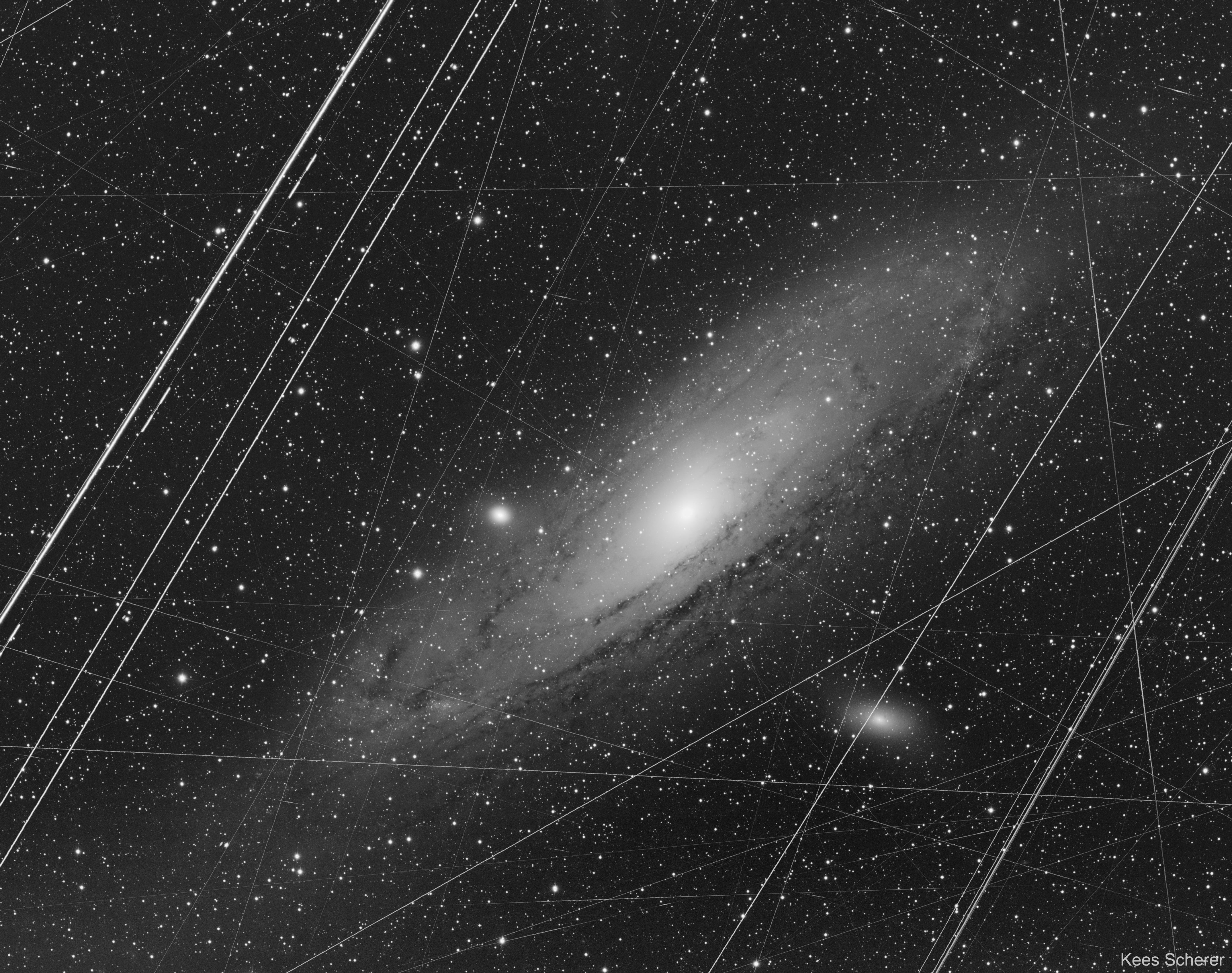
Andromeda before Photoshop
27/09/2026
What does the Andromeda galaxy really look like? The featured image shows how our Milky Way Galaxy's closest major galactic neighbor really appears in a long exposure through Earth's busy skies and with a digital camera that introduces normal imperfections. The picture is a stack of 223 images, each a 300 second exposure, taken from a garden observatory in Portugal during 2019. Obvious image deficiencies include bright parallel airplane trails, long and continuous satellite trails, short cosmic ray streaks, and bad pixels. These imperfections were actually not removed with Photoshop specifically, but rather greatly reduced with a series of computer software packages that included Astro Pixel Processor, DeepSkyStacker, and PixInsight. All of this work was done not to deceive you with a digital fantasy that has little to do with the real likeness of the Andromeda galaxy (M31), but to minimize Earthly artifacts that have nothing to do with the distant galaxy and so better recreate what M31 really does look like. APOD's email for image submissions has changed. Please see: APOD Submissions APOD's main NASA site is moving: From apod.nasa.gov to science.nasa.gov/apod
Copyright: NASA
Προηγούμενες Αστρονομικές Εικόνες της Ημέρας από τη NASA
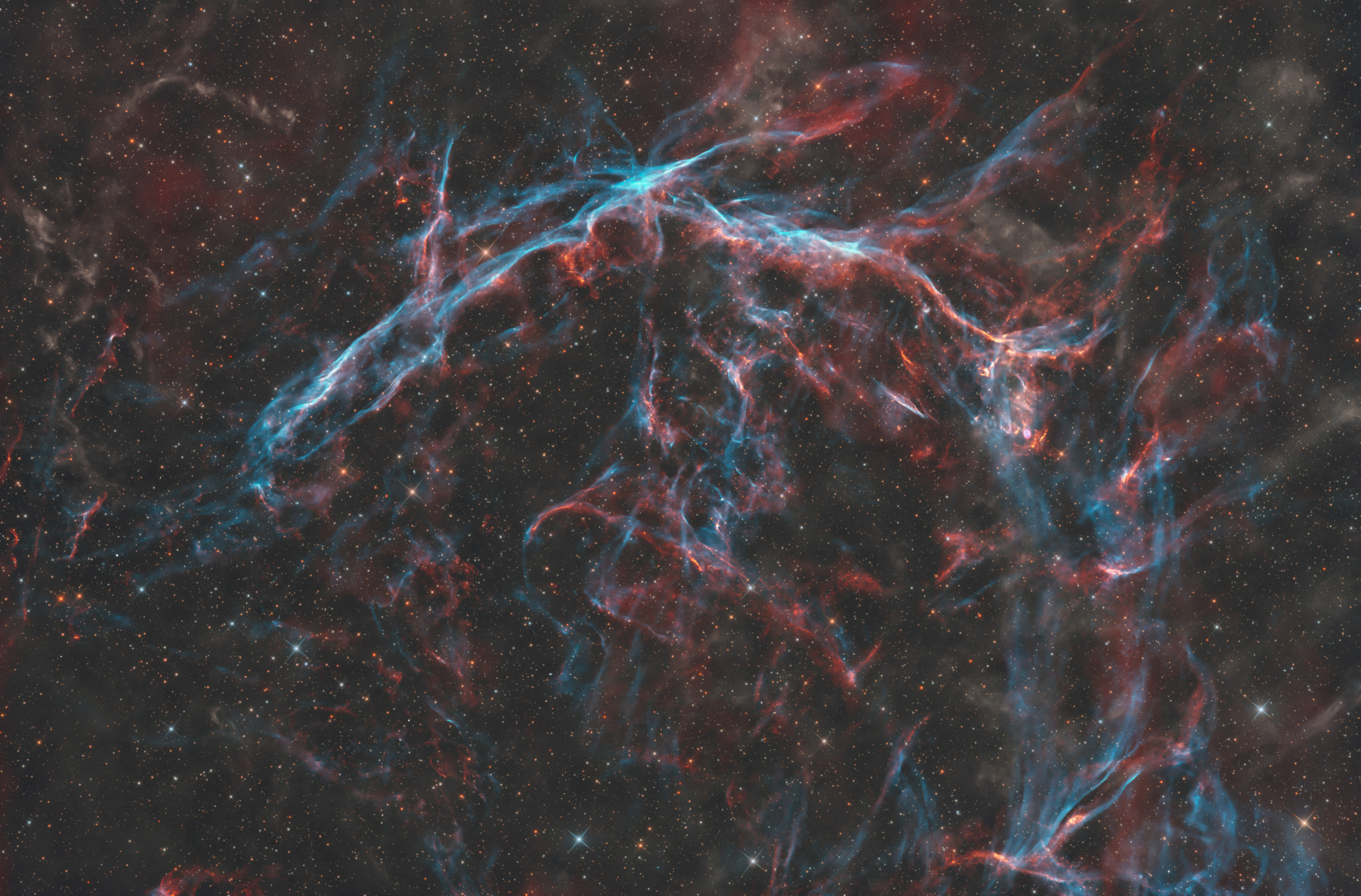
Supernova Remnant CTA 1
23/08/2024
There is a quiet pulsar at the heart of CTA 1. The supernova remnant was discovered as a source of emission at radio wavelengths by astronomers in 1960 and since identified as the result of the death explosion of a massive star. But no radio pulses were detected from the expected pulsar, the rotating neutron star remnant of the massive star's collapsed core. Seen about 10,000 years after the initial supernova explosion, the interstellar debris cloud is faint at optical wavelengths. CTA 1's visible wavelength emission from still expanding shock fronts is revealed in this deep telescopic image, a frame that spans about 2 degrees across a starfield in the northern constellation of Cepheus. While no pulsar has since been found at radio wavelengths, in 2008 the Fermi Gamma-ray Space Telescope detected pulsed emission from CTA 1, identifying the supernova remnant's rotating neutron star. The source has been recognized as the first in a growing class of pulsars that are quiet at radio wavelengths but pulse in high-energy gamma-rays.
Copyright: Thomas Lelu
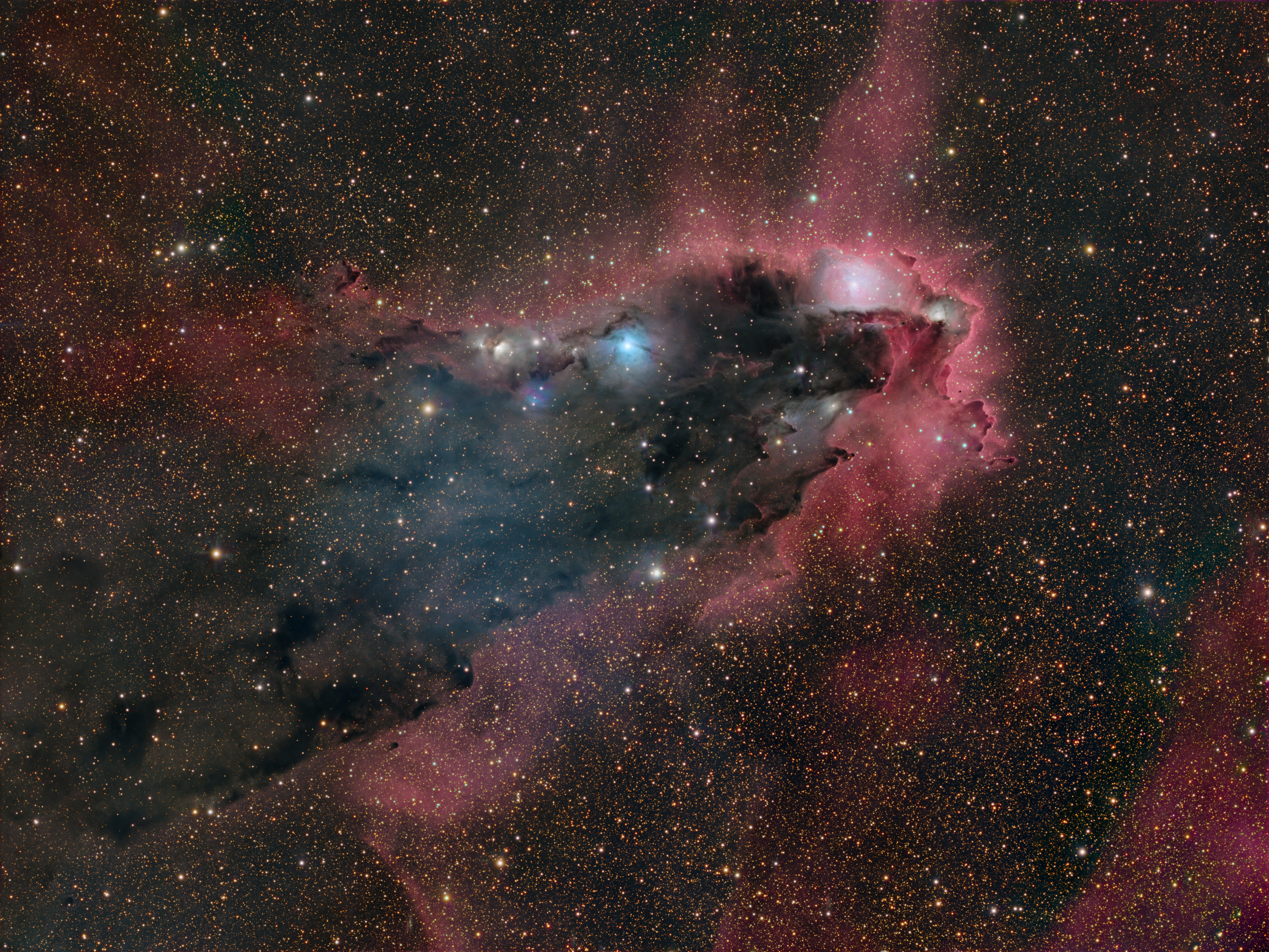
The Dark Tower in Scorpius
22/08/2024
In silhouette against a crowded star field along the tail of the arachnological constellation Scorpius, this dusty cosmic cloud evokes for some the image of an ominous dark tower. In fact, monstrous clumps of dust and molecular gas collapsing to form stars may well lurk within the dark nebula, a structure that spans almost 40 light-years across this gorgeous telescopic portrait. A cometary globule, the swept-back cloud is shaped by intense ultraviolet radiation from the OB association of very hot stars in NGC 6231, off the upper right corner of the scene. That energetic ultraviolet light also powers the globule's bordering reddish glow of hydrogen gas. Hot stars embedded in the dust can be seen as bluish reflection nebulae. This dark tower and associated nebulae are about 5,000 light-years away. Growing Gallery: Moon Eclipses Saturn in August 2024
Copyright: Mike Selby
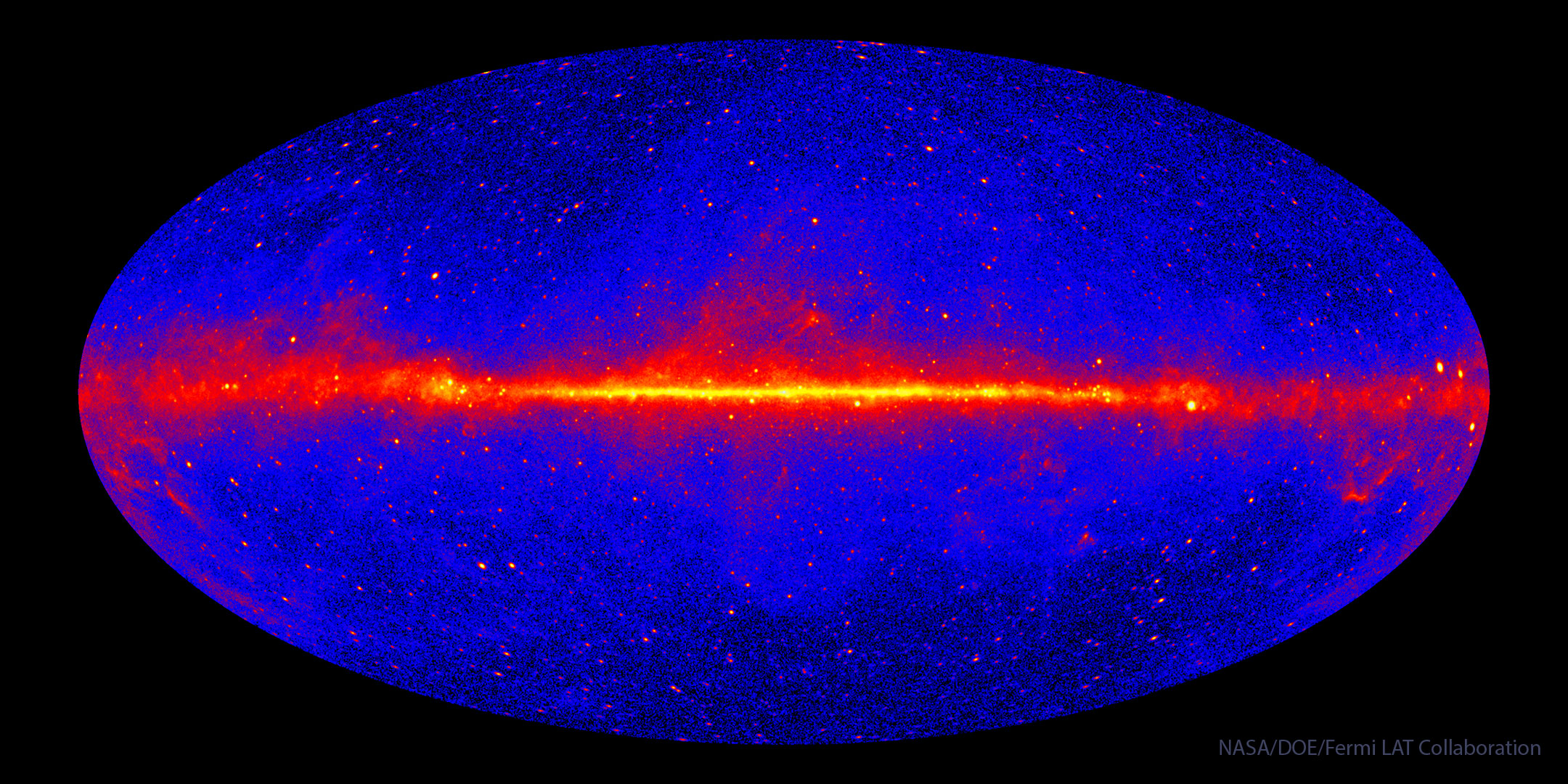
Fermi's 12-year All-Sky Gamma-ray Map
21/08/2024
Forget X-ray vision — imagine what you could see with gamma-ray vision! The featured all-sky map shows what the universe looks like to NASA's Fermi Gamma-ray Space Telescope. Fermi sees light with energies about a billion times what the human eye can see, and the map combines 12 years of Fermi observations. The colors represent the brightness of the gamma-ray sources, with brighter sources appearing lighter in color. The prominent stripe across the middle is the central plane of our Milky Way galaxy. Most of the red and yellow dots scattered above and below the Milky Way’s plane are very distant galaxies, while most of those within the plane are nearby pulsars. The blue background that fills the image is the diffuse glow of gamma-rays from distant sources that are too dim to be detected individually. Some gamma-ray sources remain unidentified and topics of research — currently no one knows what they are.
Copyright: NASA
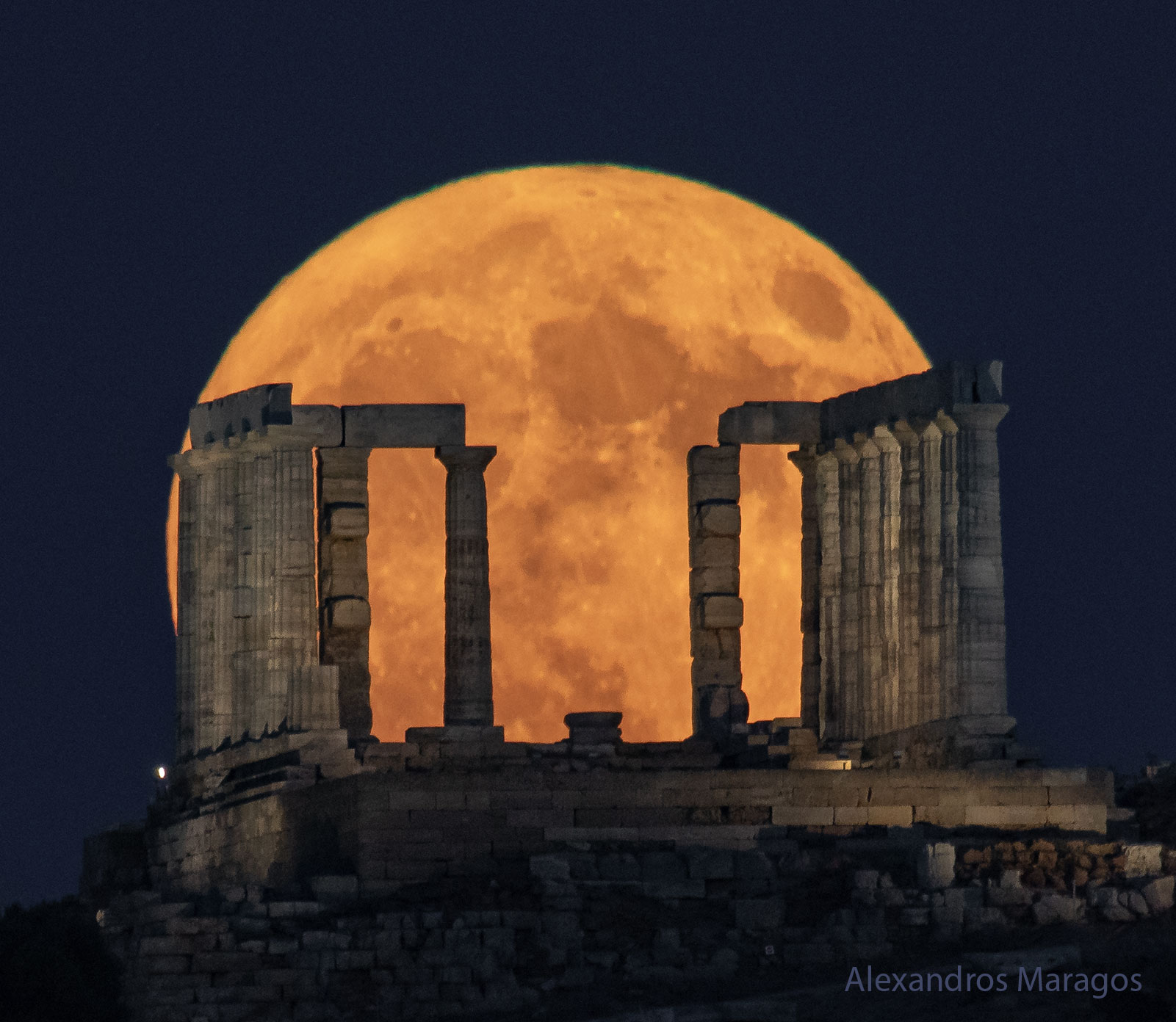
Supermoon Beyond the Temple of Poseidon
20/08/2024
A supermoon occurred yesterday. And tonight's moon should also look impressive. Supermoons appear slightly larger and brighter than most full moons because they reach their full phase when slightly nearer to the Earth -- closer than 90 percent of all full moons. This supermoon was also a blue moon given the definition that it is the third of four full moons occurring during a single season. Blue moons are not usually blue, and a different definition holds that a blue moon is the second full moon that occurs during a single month. The featured image captured the blue supermoon right near its peak size yesterday as it was rising beyond the Temple of Poseidon in Greece. This supermoon is particularly unusual in that it is the first of four successive supermoons, the next three occurring in September, October, and November.
Copyright: NASA
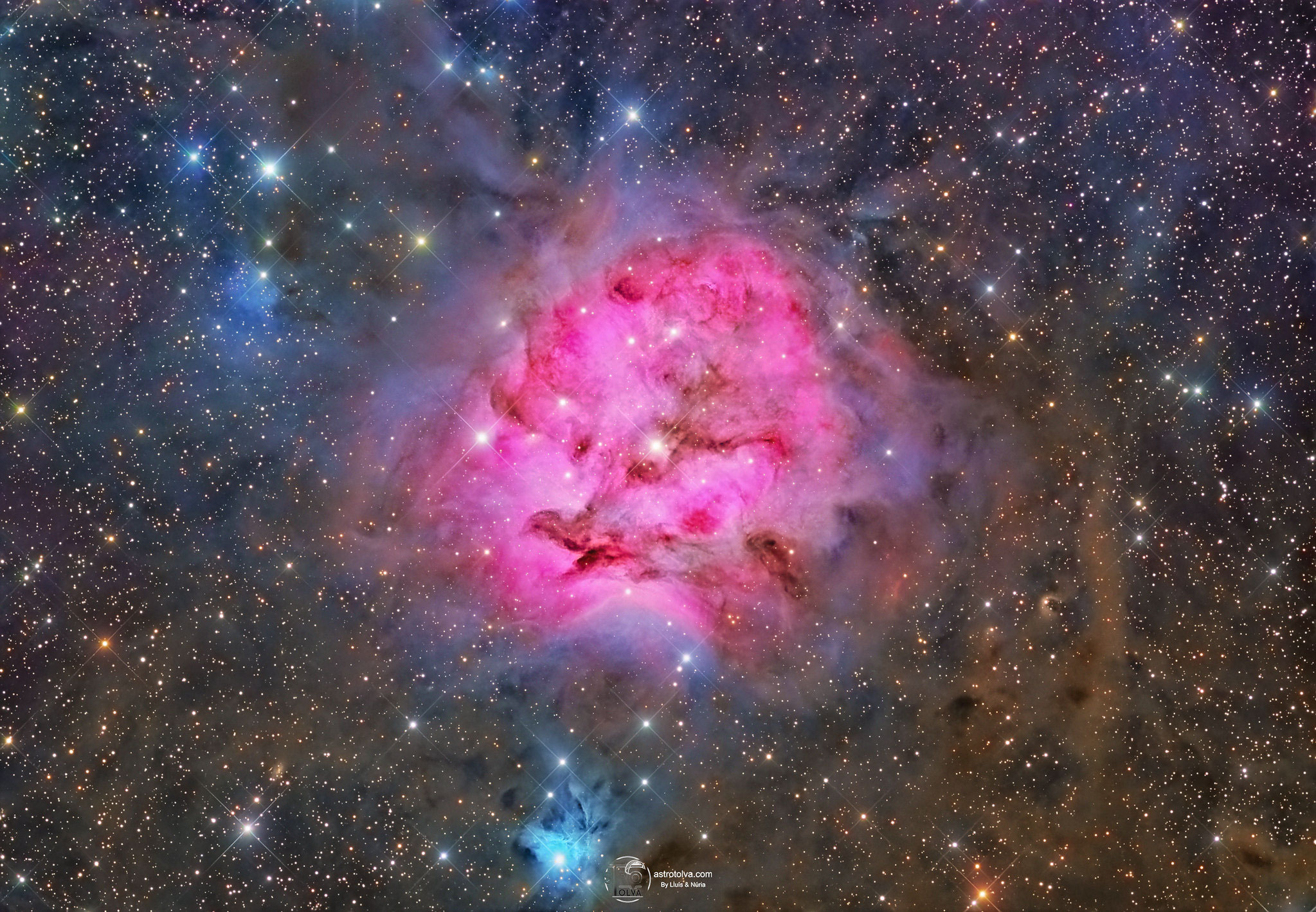
IC 5146: The Cocoon Nebula
19/08/2024
Inside the Cocoon Nebula is a newly developing cluster of stars. Cataloged as IC 5146, the beautiful nebula is nearly 15 light-years wide. Soaring high in northern summer night skies, it's located some 4,000 light years away toward the constellation of the Swan (Cygnus). Like other star forming regions, it stands out in red, glowing, hydrogen gas excited by young, hot stars, and dust-reflected starlight at the edge of an otherwise invisible molecular cloud. In fact, the bright star found near the center of this nebula is likely only a few hundred thousand years old, powering the nebular glow as it clears out a cavity in the molecular cloud's star forming dust and gas. A 48-hour long integration resulted in this exceptionally deep color view tracing tantalizing features within and surrounding the dusty stellar nursery.
Copyright: Luis Romero Ventura
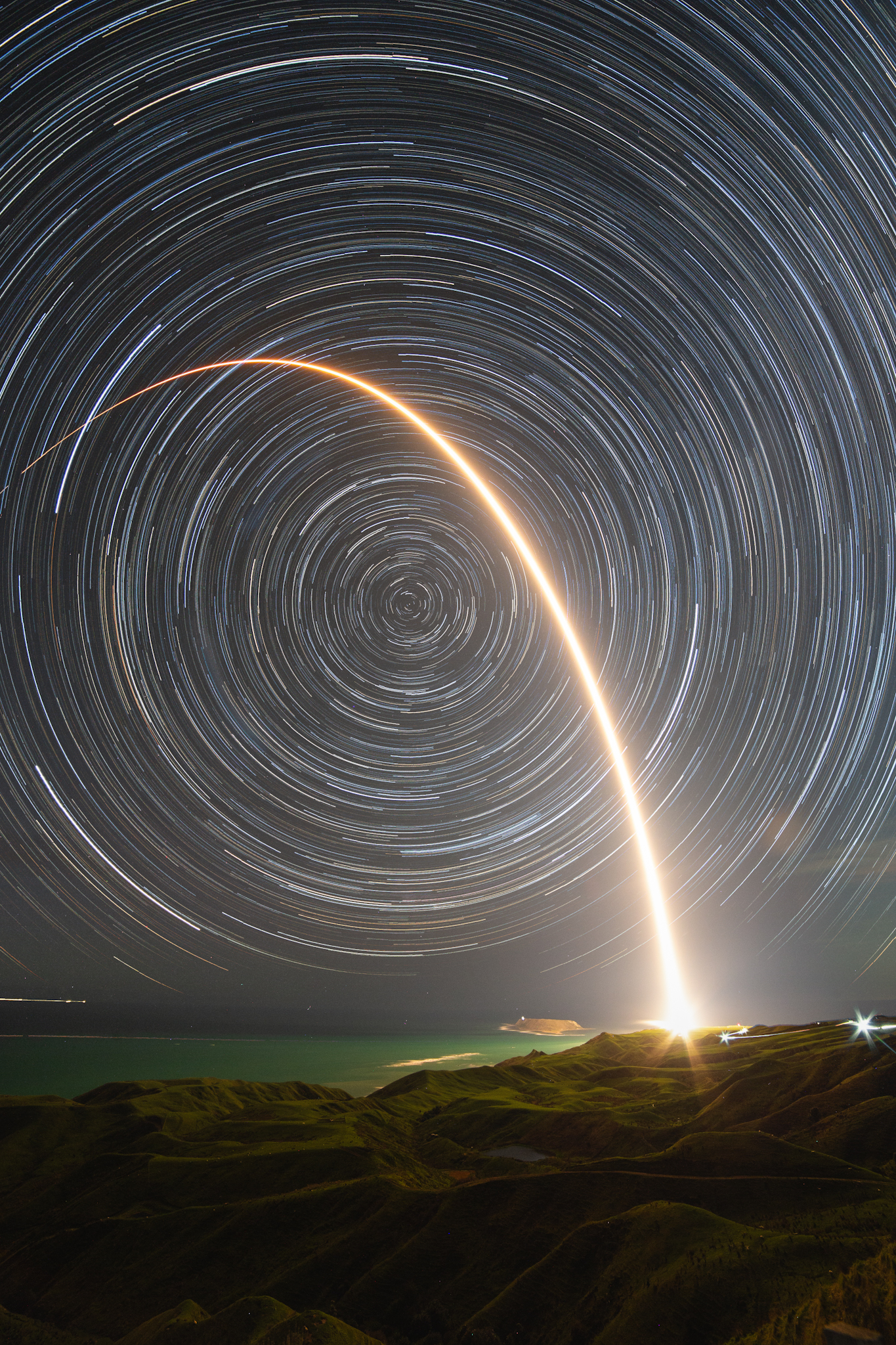
Sky Full of Arcs
17/08/2024
On August 11 a Rocket Lab Electron rocket launched from a rotating planet. With a small satellite on board its mission was dubbed A Sky Full of SARs (Synthetic Aperture Radar satellites), departing for low Earth orbit from Mahia Peninsula on New Zealand's north island. The fiery trace of the Electron's graceful launch arc is toward the east in this southern sea and skyscape, a composite of 50 consecutive frames taken over 2.5 hours. Fixed to a tripod, the camera was pointing directly at the South Celestial Pole, the extension of planet Earth's axis of rotation in to space. But no bright star marks that location in the southern hemisphere's night sky. Still, the South Celestial Pole is easy to spot. It lies at the center of the concentric star trail arcs that fill the skyward field of view. Gallery: Perseid Meteor Shower 2024 and Aurorae
Copyright: Rory Gannaway
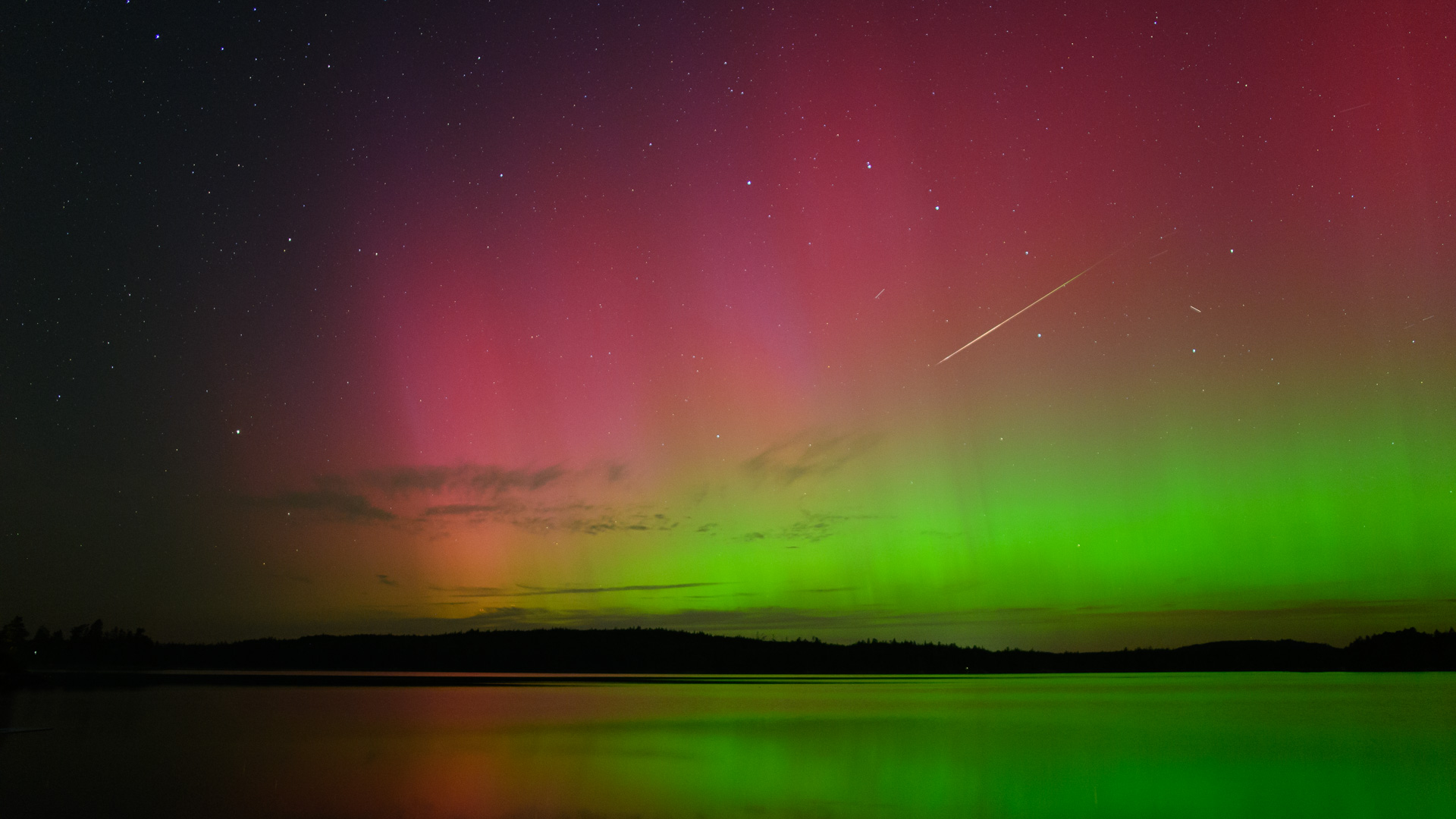
Meteor Borealis
16/08/2024
A single exposure made with a camera pointed almost due north on August 12 recorded this bright Perseid meteor in the night sky west of Halifax, Nova Scotia, Canada. The meteor's incandescent trace is fleeting. It appears to cross the stars of the Big Dipper, famous northern asterism and celestial kitchen utensil, while shimmering curtains of aurora borealis, also known as the northern lights, dance in the night. Doubling the wow factor for night skywatchers near the peak of this year's Perseid meteor shower auroral activity on planet Earth was enhanced by geomagnetic storms. The intense space weather was triggered by flares from an active Sun. Gallery: Perseid Meteor Shower 2024 and Aurorae
Copyright: Jason Dain
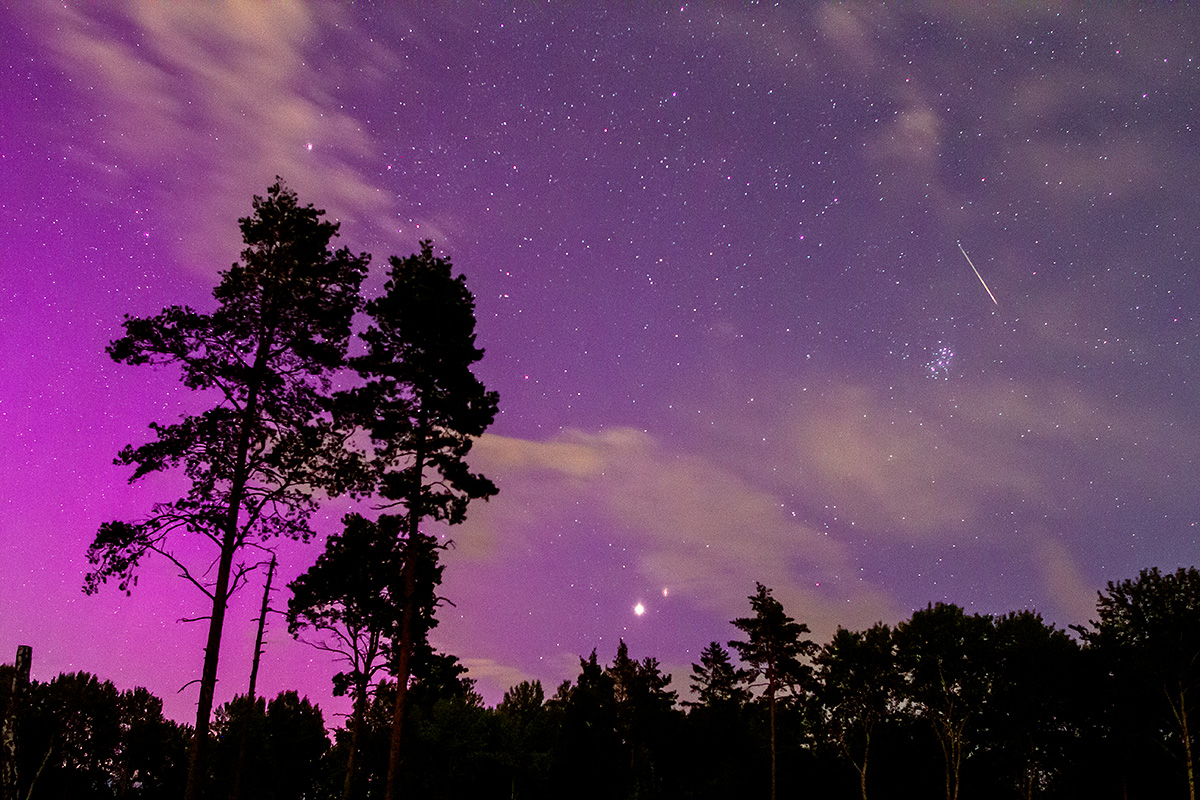
Late Night Vallentuna
15/08/2024
Bright Mars and even brighter Jupiter are in close conjunction just above the pine trees in this post-midnight skyscape from Vallentuna, Sweden. Taken on August 12 during a geomagnetic storm, the snapshot records the glow of aurora borealis or northern lights, beaming from the left side of the frame. Of course on that date Perseid meteors rained through planet Earth's skies, grains of dust from the shower's parent, periodic comet Swift-Tuttle. The meteor streak at the upper right is a Perseid plowing through the atmosphere at about 60 kilometers per second. Also well-known in in Earth's night sky, the bright Pleides star cluster shines below the Perseid meteor streak. In Greek myth, the Pleiades were seven daughters of the astronomical titan Atlas and sea-nymph Pleione. The Pleiades and their parents' names are given to the cluster's nine brightest stars. Gallery: Perseid Meteor Shower 2024 and Aurorae
Copyright: Clear Skies
Η Αστρονομική Εικόνα της Ημέρας από τη NASA (NASA Astronomy Picture of the Day) είναι μια δωρεάν υπηρεσία που παρέχει καθημερινά μια εντυπωσιακή εικόνα από το σύμπαν, την λήψη της οποίας έχει πραγματοποιήσει κάποιος από τους αστρονόμους της NASA ή από κάποιον από τους δορυφόρους ή τα τηλεσκόπια που η NASA λειτουργεί. Οι εικόνες που εμφανίζονται καλύπτουν μια ευρεία γκάμα από θέματα, συμπεριλαμβανομένων των αστερισμών, των γαλαξιών, των πλανητικών συστημάτων, των κομητών, των αστρικών σωμάτων και των παρατηρητηρίων. Κάθε εικόνα συνοδεύεται από μια σύντομη εξήγηση και πληροφορίες σχετικά με το τι παρατηρείται στην εικόνα.