Η Αστρονομική Εικόνα της Ημέρας από τη NASA
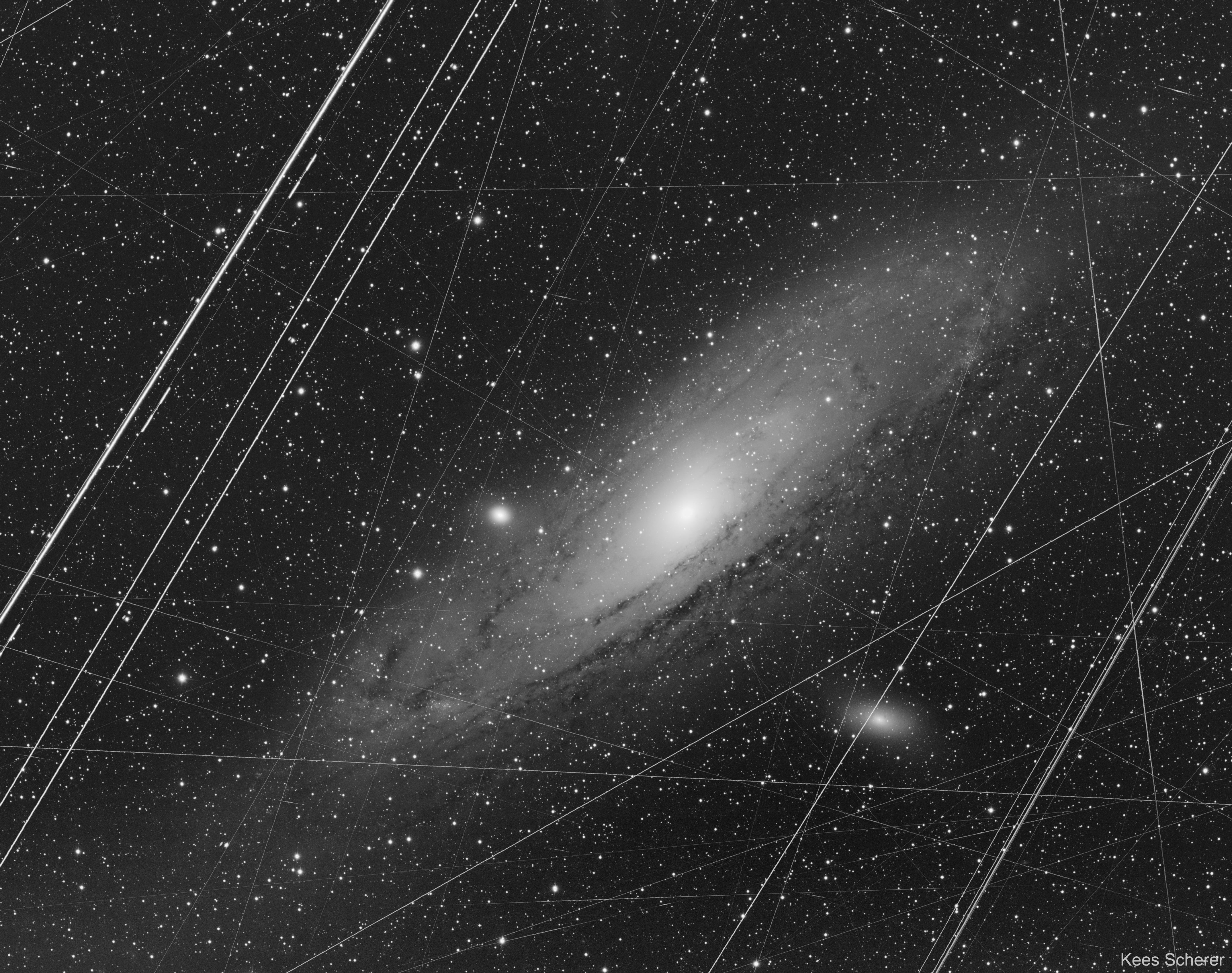
Andromeda before Photoshop
27/09/2026
What does the Andromeda galaxy really look like? The featured image shows how our Milky Way Galaxy's closest major galactic neighbor really appears in a long exposure through Earth's busy skies and with a digital camera that introduces normal imperfections. The picture is a stack of 223 images, each a 300 second exposure, taken from a garden observatory in Portugal during 2019. Obvious image deficiencies include bright parallel airplane trails, long and continuous satellite trails, short cosmic ray streaks, and bad pixels. These imperfections were actually not removed with Photoshop specifically, but rather greatly reduced with a series of computer software packages that included Astro Pixel Processor, DeepSkyStacker, and PixInsight. All of this work was done not to deceive you with a digital fantasy that has little to do with the real likeness of the Andromeda galaxy (M31), but to minimize Earthly artifacts that have nothing to do with the distant galaxy and so better recreate what M31 really does look like. APOD's email for image submissions has changed. Please see: APOD Submissions APOD's main NASA site is moving: From apod.nasa.gov to science.nasa.gov/apod
Copyright: NASA
Προηγούμενες Αστρονομικές Εικόνες της Ημέρας από τη NASA

Big Dipper over Pyramid Mountain
10/12/2023
When did you first learn to identify this group of stars? Although they are familiar to many people around the world, different cultures have associated this asterism with different icons and folklore. Known in the USA as the Big Dipper, the stars are part of a constellation designated by the International Astronomical Union in 1922 as the Great Bear (Ursa Major). The recognized star names of these stars are (left to right) Alkaid, Mizar/Alcor, Alioth, Megrez, Phecda, Merak, and Dubhe. Of course, stars in any given constellation are unlikely to be physically related. But surprisingly, most of the Big Dipper stars do seem to be headed in the same direction as they plough through space, a property they share with other stars spread out over an even larger area across the sky. Their measured common motion suggests that they all belong to a loose, nearby star cluster, thought to be on average only about 75 light-years away and up to 30 light-years across. The cluster is more properly known as the Ursa Major Moving Group. The featured image captured the iconic stars in 2017 above Pyramid Mountain in Alberta, Canada. Night Sky Network webinar: APOD editor to review coolest space images of 2023
Copyright: Steve Cullen
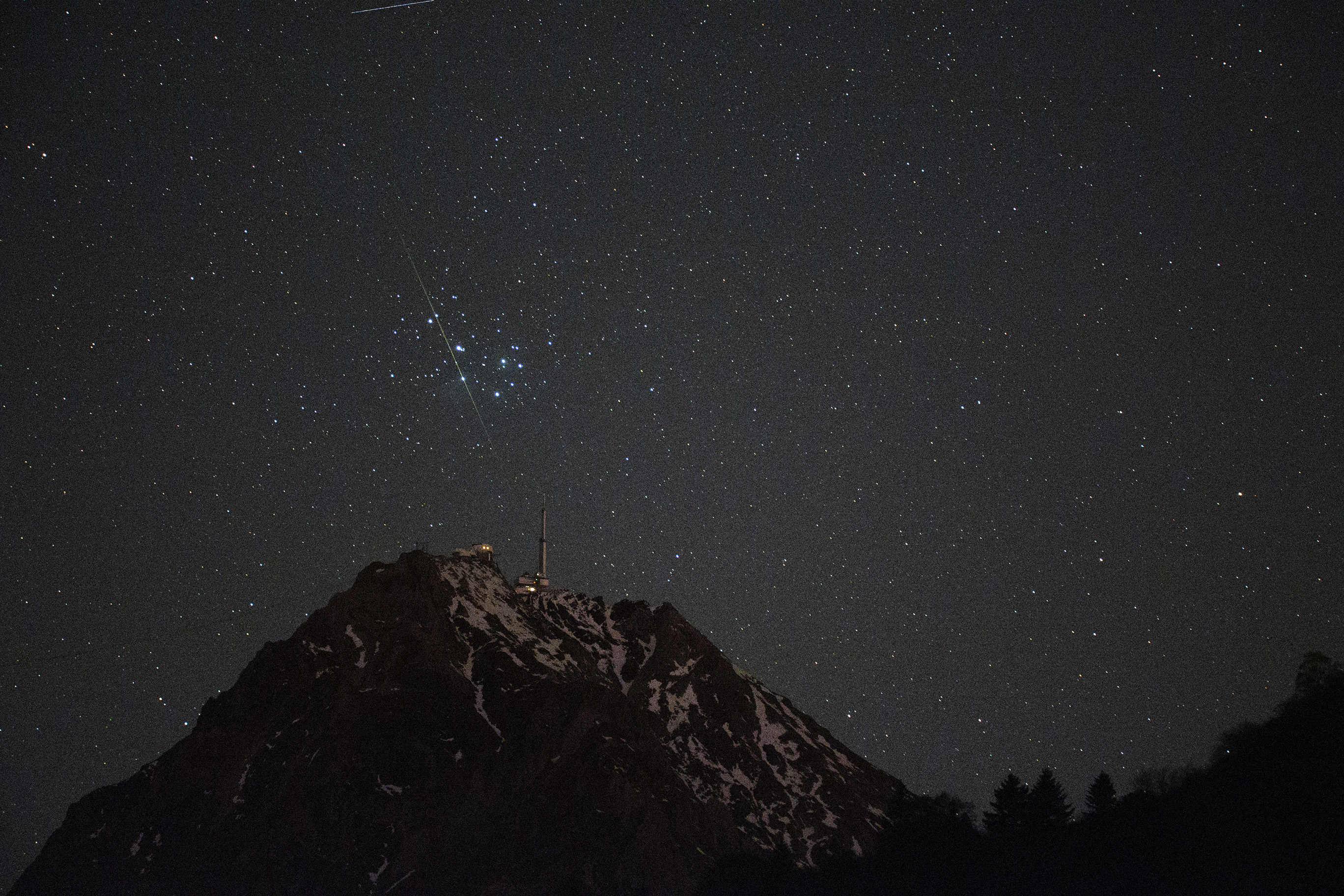
Pic du Pleiades
09/12/2023
Near dawn on November 19 the Pleiades stood in still dark skies over the French Pyrenees. But just before sunrise a serendipitous moment was captured in this single 3 second exposure; a bright meteor streak appeared to pierce the heart of the galactic star cluster. From the camera's perspective, star cluster and meteor were poised directly above the mountain top observatory on the Pic du Midi de Bigorre. And though astronomers might consider the Pleiades to be relatively close by, the grain of dust vaporizing as it plowed through planet Earth's upper atmosphere actually missed the cluster's tight grouping of young stars by about 400 light-years. While recording a night sky timelapse series, the camera and telephoto lens were fixed to a tripod on the Tour-de-France-cycled slopes of the Col du Tourmalet about 5 kilometers from the Pic du Midi.
Copyright: Jean-Francois Graffand
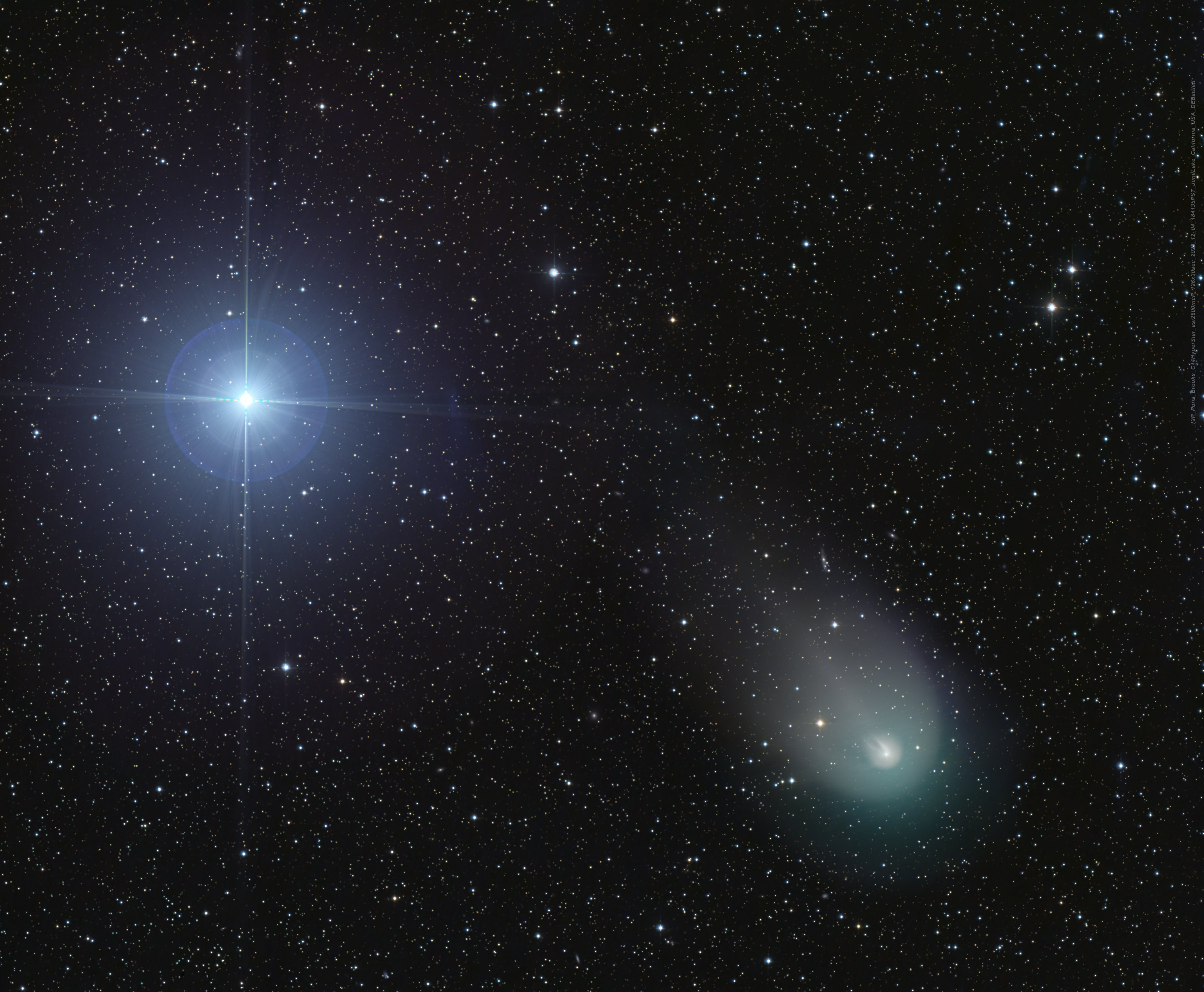
Vega and Comet 12P/Pons-Brooks
08/12/2023
On December 4, periodic Comet 12P/Pons-Brooks shared this telescopic field of view with Vega, alpha star of the northern constellation Lyra. Fifth brightest star in planet Earth's night, Vega is some 25 light-years distant while the much fainter comet was about 21 light-minutes away. In recent months, outbursts have caused dramatic increases in brightness for Pons-Brooks though. Nicknamed the Devil Comet for its hornlike appearance, fans of interstellar spaceflight have also suggested the distorted shape of this large comet's central coma looks like the Millenium Falcon. A Halley-type comet, 12P/Pons-Brooks last visited the inner Solar System in 1954. Its next perihelion passage or closest approach to the Sun will be April 21, 2024. That's just two weeks after the April 8 total solar eclipse path crosses North America. But, highly inclined to the Solar System's ecliptic plane, the orbit of periodic Comet 12P/Pons-Brooks will never cross the orbit of planet Earth.
Copyright: Dan Bartlett
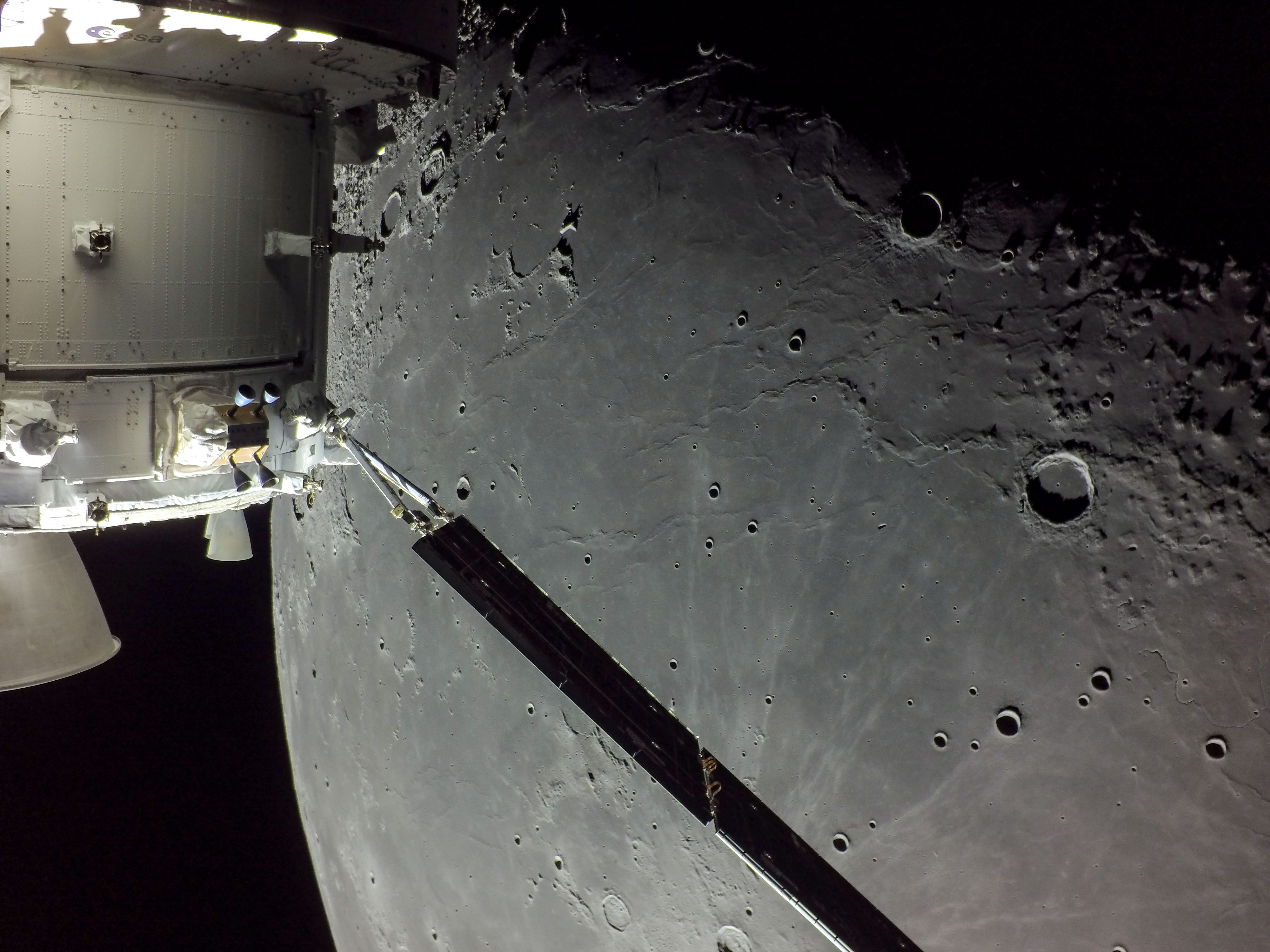
Orion and the Ocean of Storms
07/12/2023
On December 5, 2022, a camera on board the uncrewed Orion spacecraft captured this view as Orion approached its return powered flyby of the Moon. Beyond one of Orion's extended solar arrays lies dark, smooth, terrain along the western edge of the Oceanus Procellarum. Prominent on the lunar nearside Oceanus Procellarum, the Ocean of Storms, is the largest of the Moon's lava-flooded maria. The lunar terminator, shadow line between lunar night and day, runs along the left of this frame. The 41 kilometer diameter crater Marius is top center, with ray crater Kepler peeking in at the edge, just right of the solar array wing. Kepler's bright rays extend to the north and west, reaching the dark-floored Marius. On December 11, 2022 the Orion spacecraft reached its home world. The historic Artemis 1 mission ended with Orion's successful splashdown in planet Earth's water-flooded Pacific Ocean.
Copyright: NASA
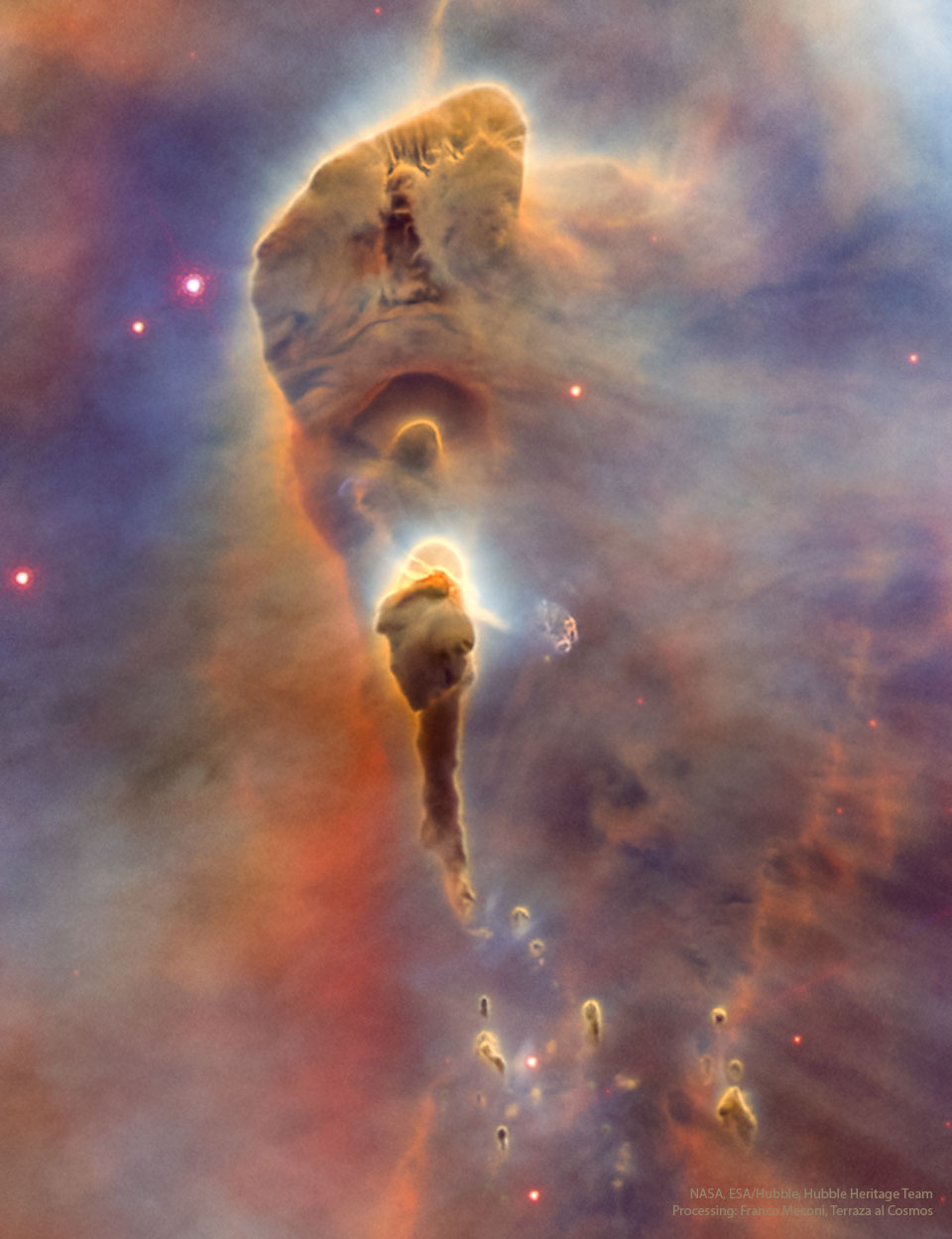
Stars Versus Dust in the Carina Nebula
06/12/2023
It's stars versus dust in the Carina Nebula and the stars are winning. More precisely, the energetic light and winds from massive newly formed stars are evaporating and dispersing the dusty stellar nurseries in which they formed. Located in the Carina Nebula and inside a region known informally as Mystic Mountain, these pillars' appearance is dominated by opaque brown dust even though it is composed mostly of clear hydrogen gas. Even though some of the dust pillars look like torches, their ends are not on fire -- rather, they are illuminated by nearby stars. About 7,500 light-years distant, the featured image was taken with the Hubble Space Telescope and highlights an interior region of Carina known as HH1066 which spans nearly a light year. Within a few million years, the stars will likely win out completely and the dust torches will completely evaporate.
Copyright: NASA
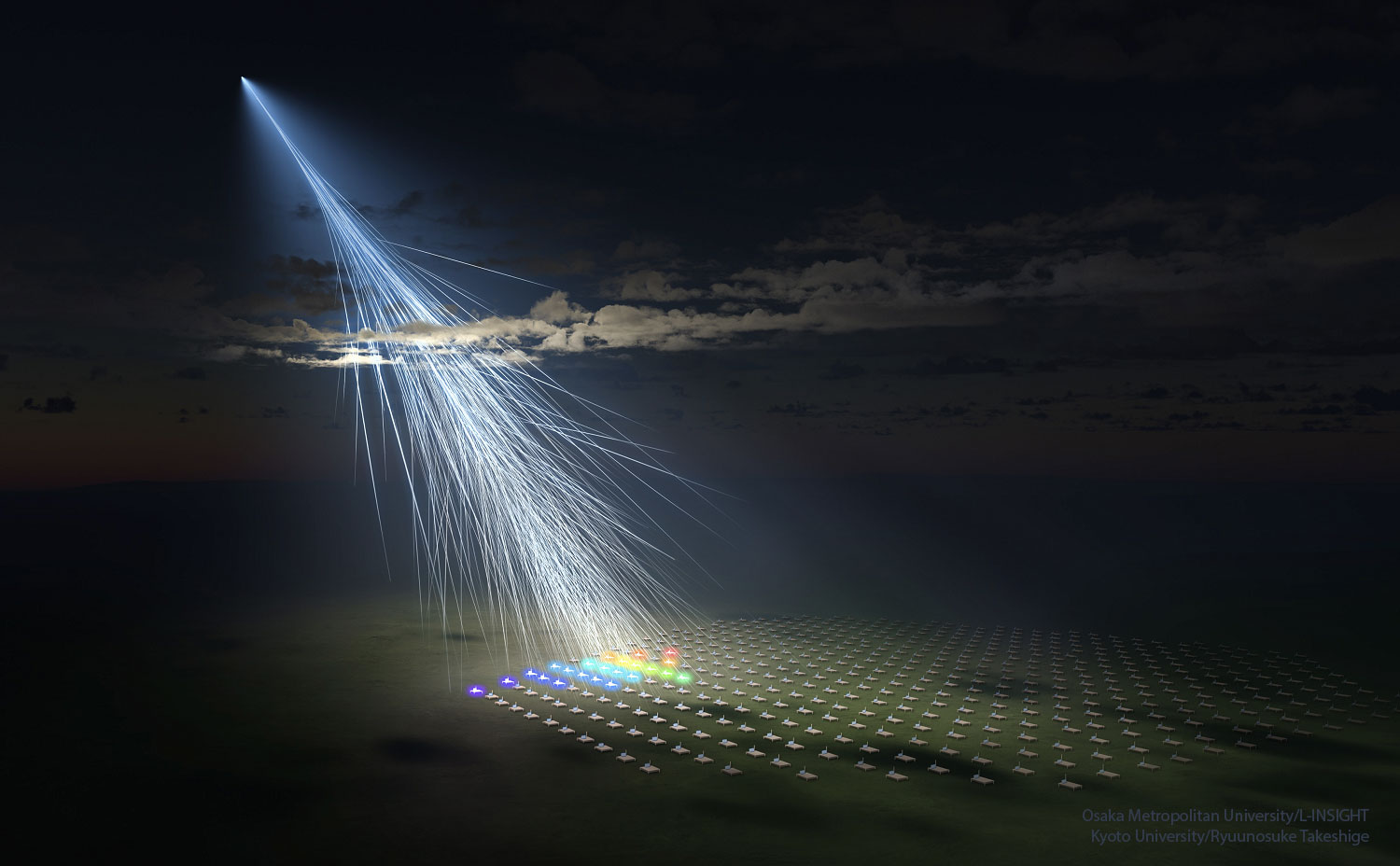
Energetic Particle Strikes the Earth
05/12/2023
It was one of the most energetic particles ever known to strike the Earth -- but where did it come from? Dubbed Amaterasu after the Shinto sun goddess, this particle, as do all cosmic rays that strike the Earth's atmosphere, caused an air shower of electrons, protons, and other elementary particles to spray down onto the Earth below. In the featured illustration, a cosmic ray air shower is pictured striking the Telescope Array in Utah, USA, which recorded the Amaterasu event in 2021 May. Cosmic ray air showers are common enough that you likely have been in a particle spray yourself, although you likely wouldn't have noticed. The origin of this energetic particle, likely the nucleus of an atom, remains a mystery in two ways. First, it is not known how any single particle or atomic nucleus can practically acquire so much energy, and second, attempts to trace the particle back to where it originated did not indicate any likely potential source. Open Science: Browse 3,200+ codes in the Astrophysics Source Code Library
Copyright: NASA
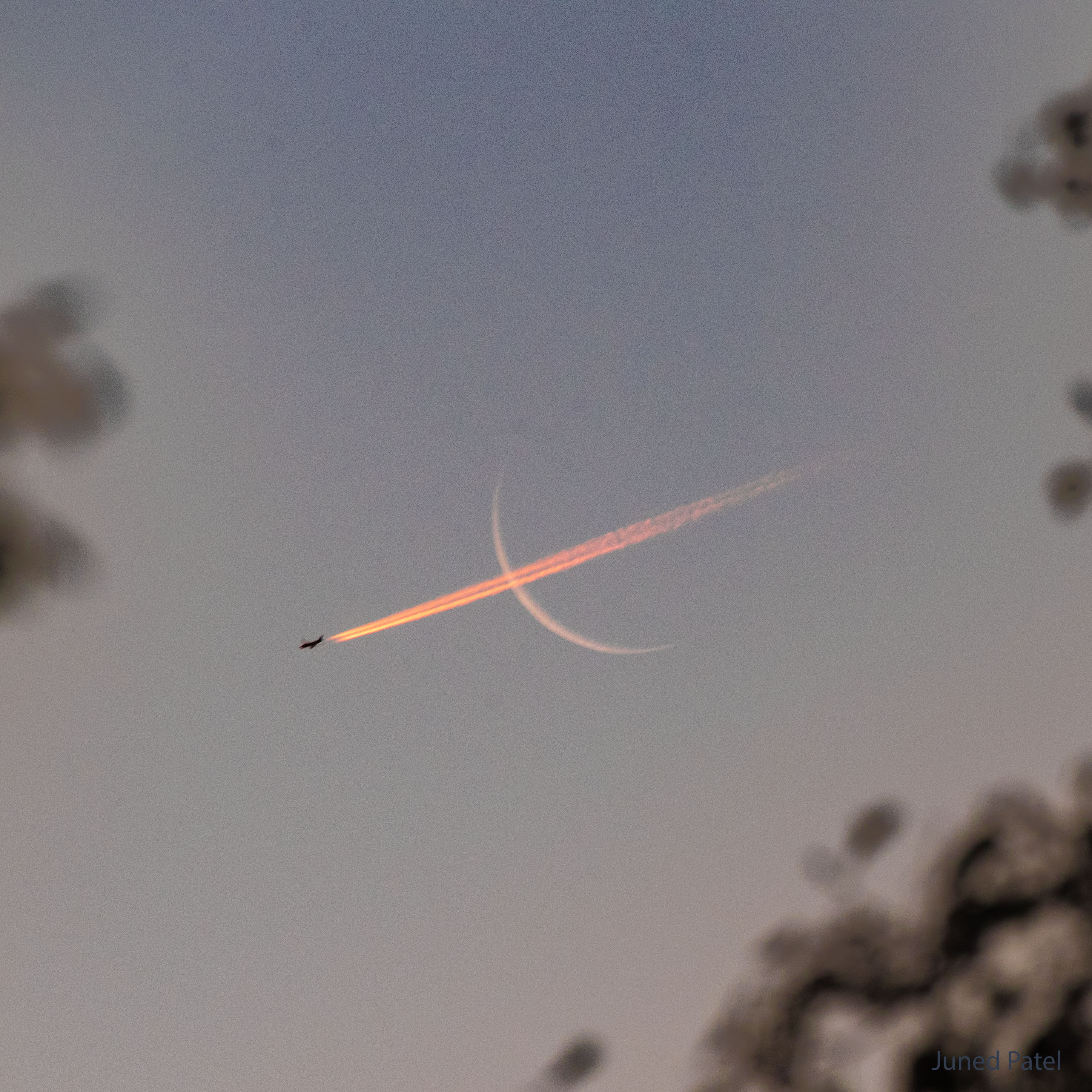
Plane Crossing Crescent Moon
04/12/2023
No, the Moon is not a bow, and no, it did not shoot out a plane like an arrow. What is pictured is a chance superposition. The plane's contrail would normally appear white, but the large volume of air toward the rising Sun preferentially knocked away blue light, not only making the sky blue, but giving the reflected trail a bright red hue. Far in the distance, well behind the plane, the crescent Moon also appears slightly reddened. Captured early last month from Bolton, UK, the featured image was taken so soon after sunrise that the plane was sunlit from below, as was its contrail. Within minutes, unfortunately, the impromptu sky show ended. The plane moved out of sight. The Moon kept rising but became harder to see through a brightening sky. And the contrail gradually dispersed.
Copyright: Juned Patel
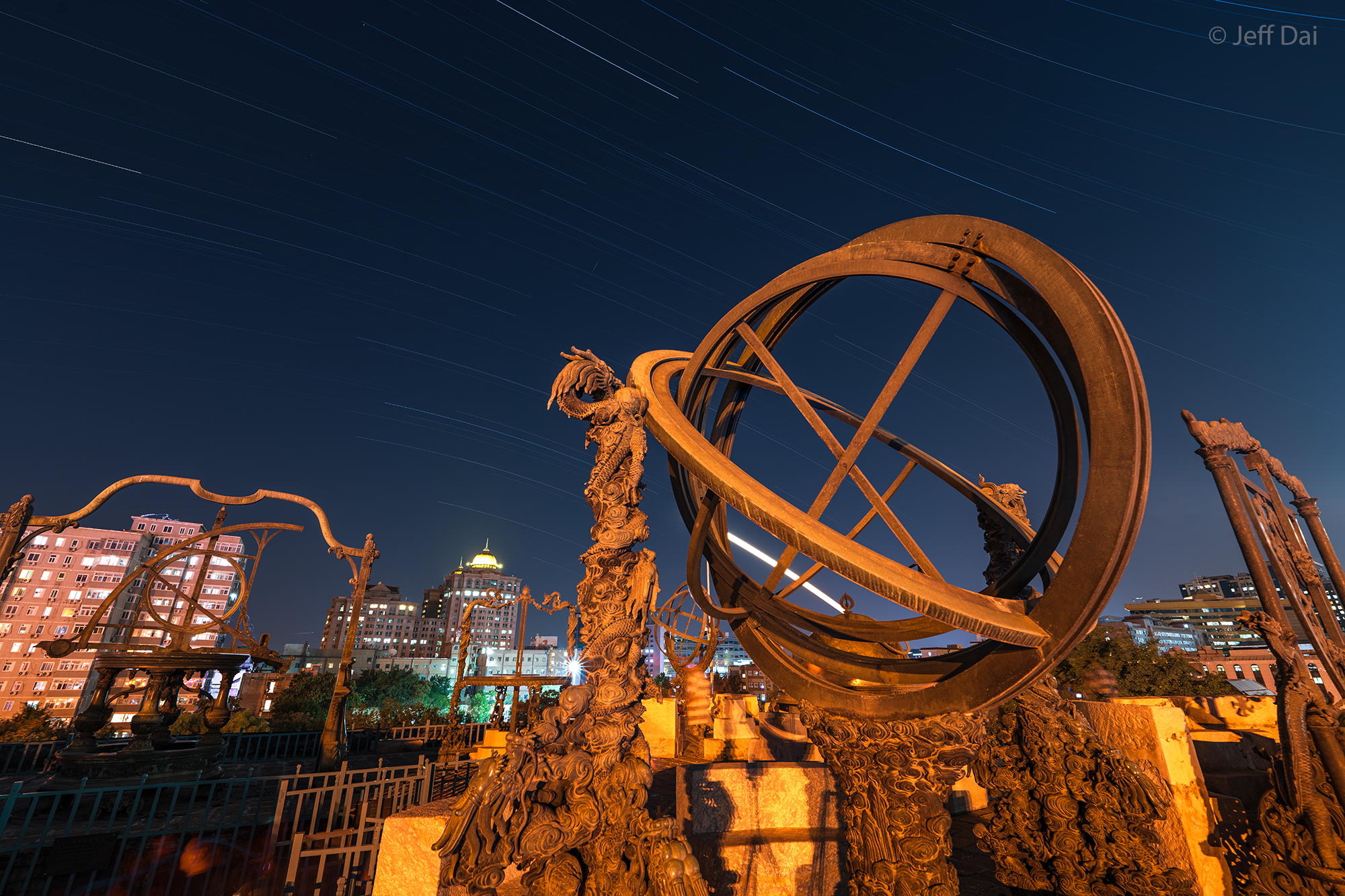
Startrails over Beijing Ancient Observatory
02/12/2023
You can take a subway ride to visit this observatory in Beijing, China but you won't find any telescopes there. Starting in the 1400s astronomers erected devices at the Beijing Ancient Observatory site to enable them to accurately measure and track the positions of naked-eye stars and planets. Some of the large, ornate astronomical instruments are still standing. You can even see stars from the star observation platform today, but now only the very brightest celestial beacons are visible against the city lights. In this time series of exposures from a camera fixed to a tripod to record graceful arcing startrails, the brightest trail is actually the Moon. Its broad arc is seen behind the ancient observatory's brass armillary sphere. Compare this picture from the Beijing Ancient Observatory taken in September 2023 to one taken in 1895.
Copyright: Jeff Dai
Η Αστρονομική Εικόνα της Ημέρας από τη NASA (NASA Astronomy Picture of the Day) είναι μια δωρεάν υπηρεσία που παρέχει καθημερινά μια εντυπωσιακή εικόνα από το σύμπαν, την λήψη της οποίας έχει πραγματοποιήσει κάποιος από τους αστρονόμους της NASA ή από κάποιον από τους δορυφόρους ή τα τηλεσκόπια που η NASA λειτουργεί. Οι εικόνες που εμφανίζονται καλύπτουν μια ευρεία γκάμα από θέματα, συμπεριλαμβανομένων των αστερισμών, των γαλαξιών, των πλανητικών συστημάτων, των κομητών, των αστρικών σωμάτων και των παρατηρητηρίων. Κάθε εικόνα συνοδεύεται από μια σύντομη εξήγηση και πληροφορίες σχετικά με το τι παρατηρείται στην εικόνα.