Η Αστρονομική Εικόνα της Ημέρας από τη NASA
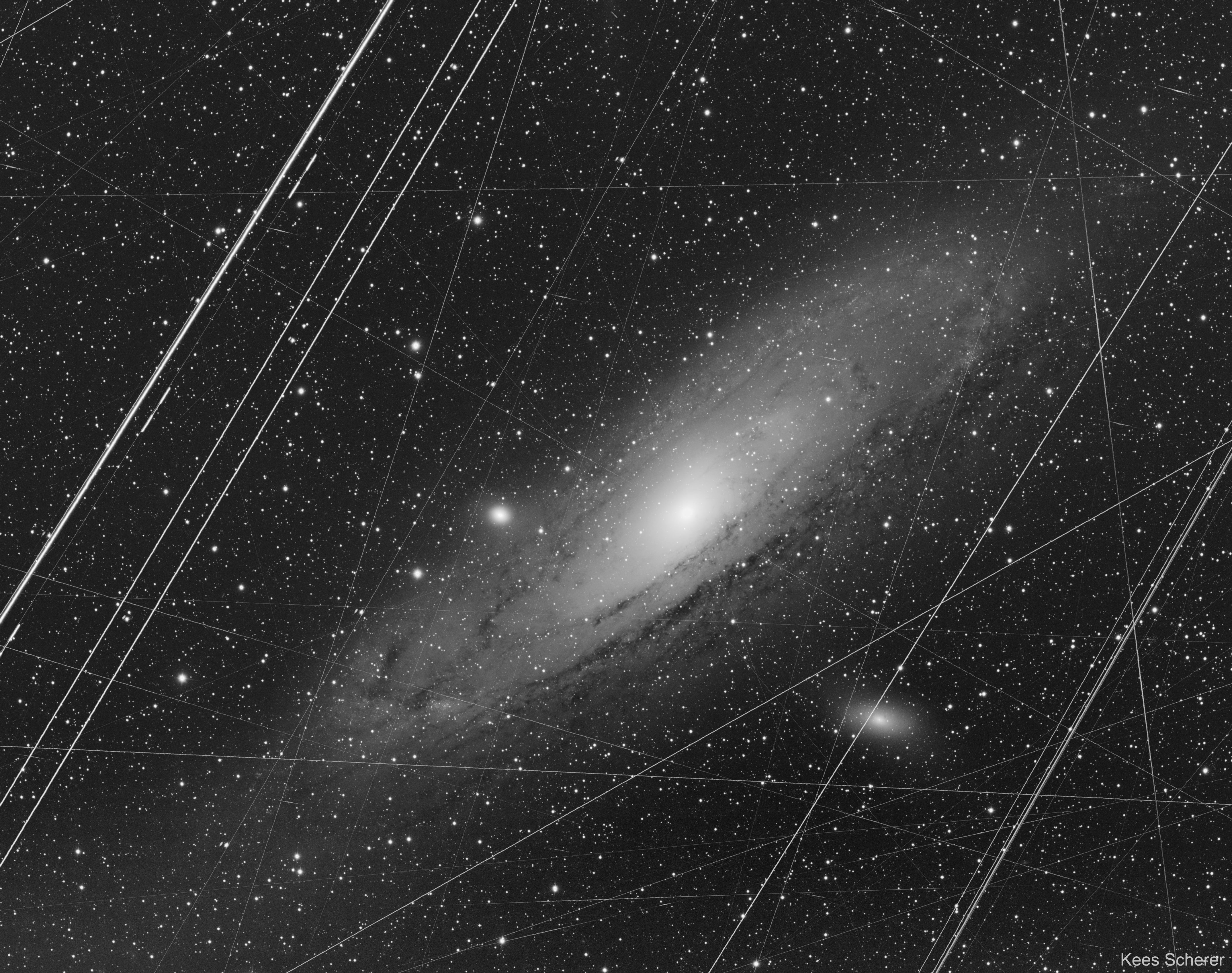
Andromeda before Photoshop
27/09/2026
What does the Andromeda galaxy really look like? The featured image shows how our Milky Way Galaxy's closest major galactic neighbor really appears in a long exposure through Earth's busy skies and with a digital camera that introduces normal imperfections. The picture is a stack of 223 images, each a 300 second exposure, taken from a garden observatory in Portugal during 2019. Obvious image deficiencies include bright parallel airplane trails, long and continuous satellite trails, short cosmic ray streaks, and bad pixels. These imperfections were actually not removed with Photoshop specifically, but rather greatly reduced with a series of computer software packages that included Astro Pixel Processor, DeepSkyStacker, and PixInsight. All of this work was done not to deceive you with a digital fantasy that has little to do with the real likeness of the Andromeda galaxy (M31), but to minimize Earthly artifacts that have nothing to do with the distant galaxy and so better recreate what M31 really does look like. APOD's email for image submissions has changed. Please see: APOD Submissions APOD's main NASA site is moving: From apod.nasa.gov to science.nasa.gov/apod
Copyright: NASA
Προηγούμενες Αστρονομικές Εικόνες της Ημέρας από τη NASA
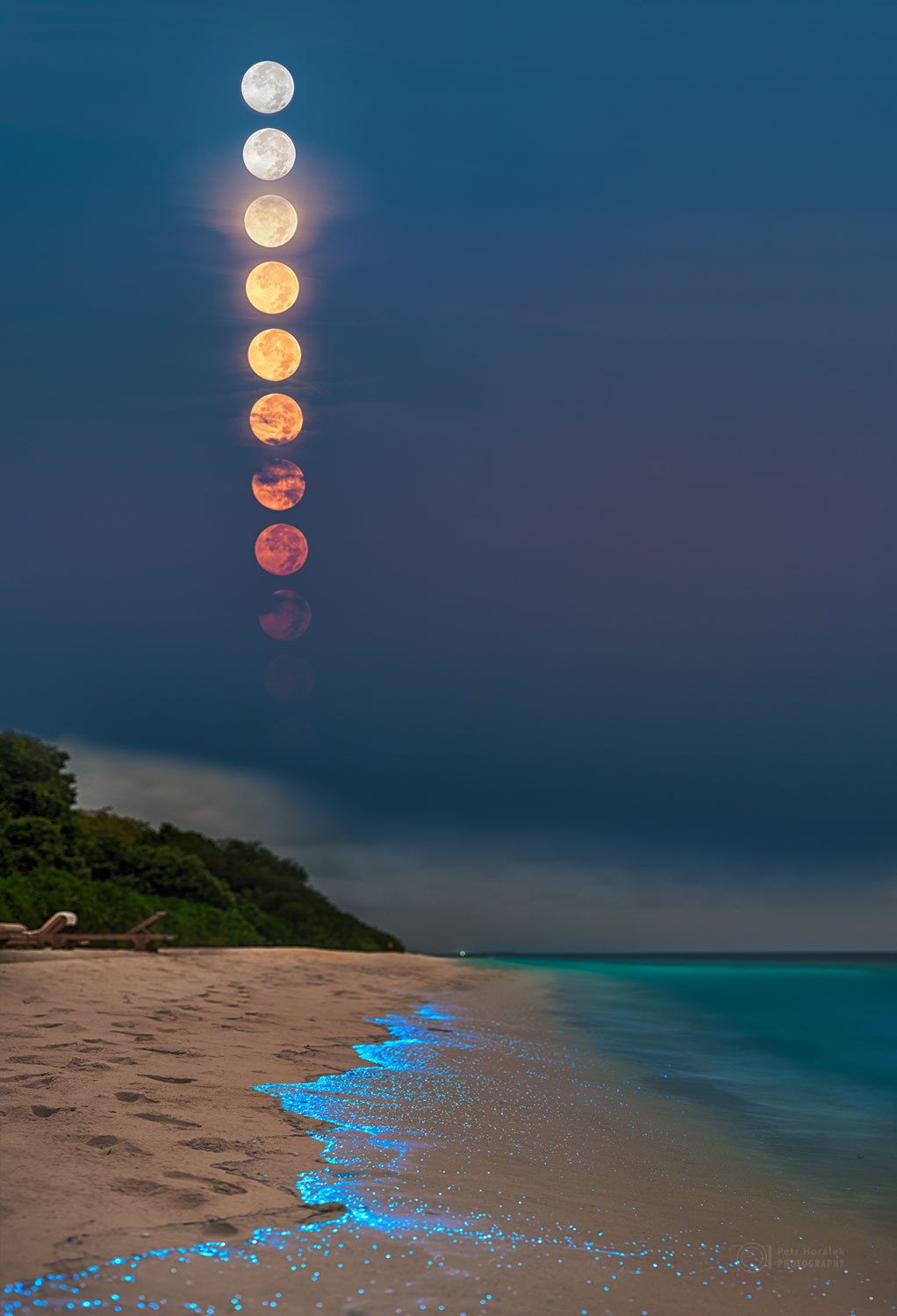
A Full Plankton Moon
11/03/2024
What glows in the night? This night featured a combination of usual and unusual glows. Perhaps the most usual glow was from the Moon, a potentially familiar object. The full Moon's nearly vertical descent results from the observer being near Earth's equator. As the Moon sets, air and aerosols in Earth's atmosphere preferentially scatter out blue light, making the Sun-reflecting satellite appear reddish when near the horizon. Perhaps the most unusual glow was from the bioluminescent plankton, likely less familiar objects. These microscopic creatures glow blue, it is thought, primarily to surprise and deter predators. In this case, the glow was caused primarily by plankton-containing waves crashing onto the beach. The image was taken on Soneva Fushi Island, Maldives just over one year ago. Your Sky Surprise: What picture did APOD feature on your birthday? (post 1995)
Copyright: Petr Horálek / Institute of Physics in Opava
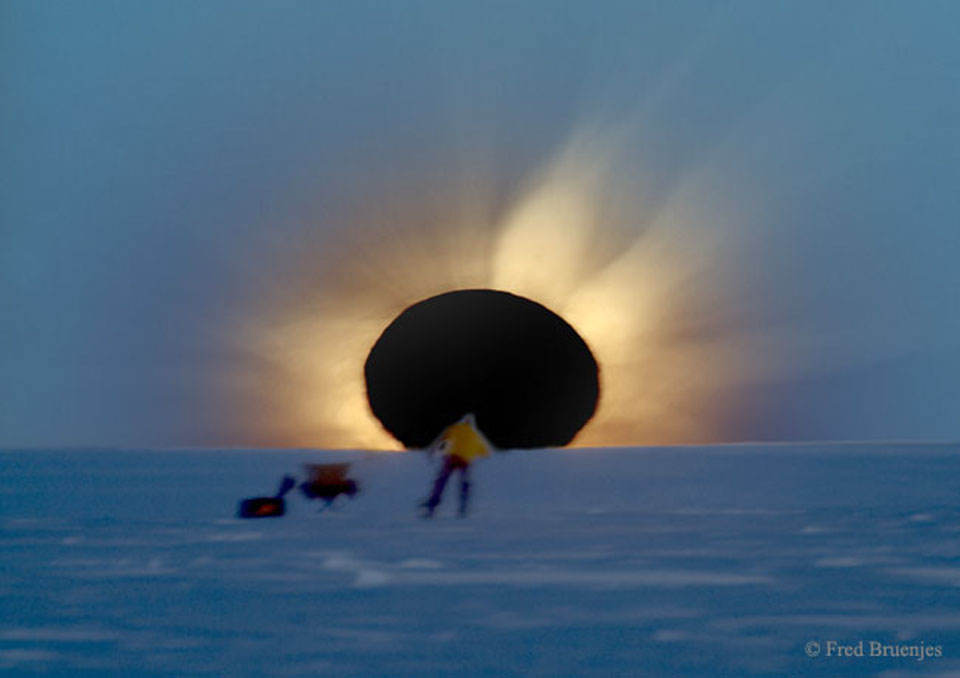
A Total Eclipse at the End of the World
10/03/2024
Would you go to the end of the world to see a total eclipse of the Sun? If you did, would you be surprised to find someone else there already? In 2003, the Sun, the Moon, Antarctica, and two photographers all lined up in Antarctica during an unusual total solar eclipse. Even given the extreme location, a group of enthusiastic eclipse chasers ventured near the bottom of the world to experience the surreal momentary disappearance of the Sun behind the Moon. One of the treasures collected was the featured picture -- a composite of four separate images digitally combined to realistically simulate how the adaptive human eye saw the eclipse. As the image was taken, both the Moon and the Sun peeked together over an Antarctic ridge. In the sudden darkness, the magnificent corona of the Sun became visible around the Moon. Quite by accident, another photographer was caught in one of the images checking his video camera. Visible to his left are an equipment bag and a collapsible chair. A more easily visible solar eclipse will occur in just under four weeks and be visible from a long, thin swath of North America.
Copyright: Fred Bruenjes (moonglow.net)
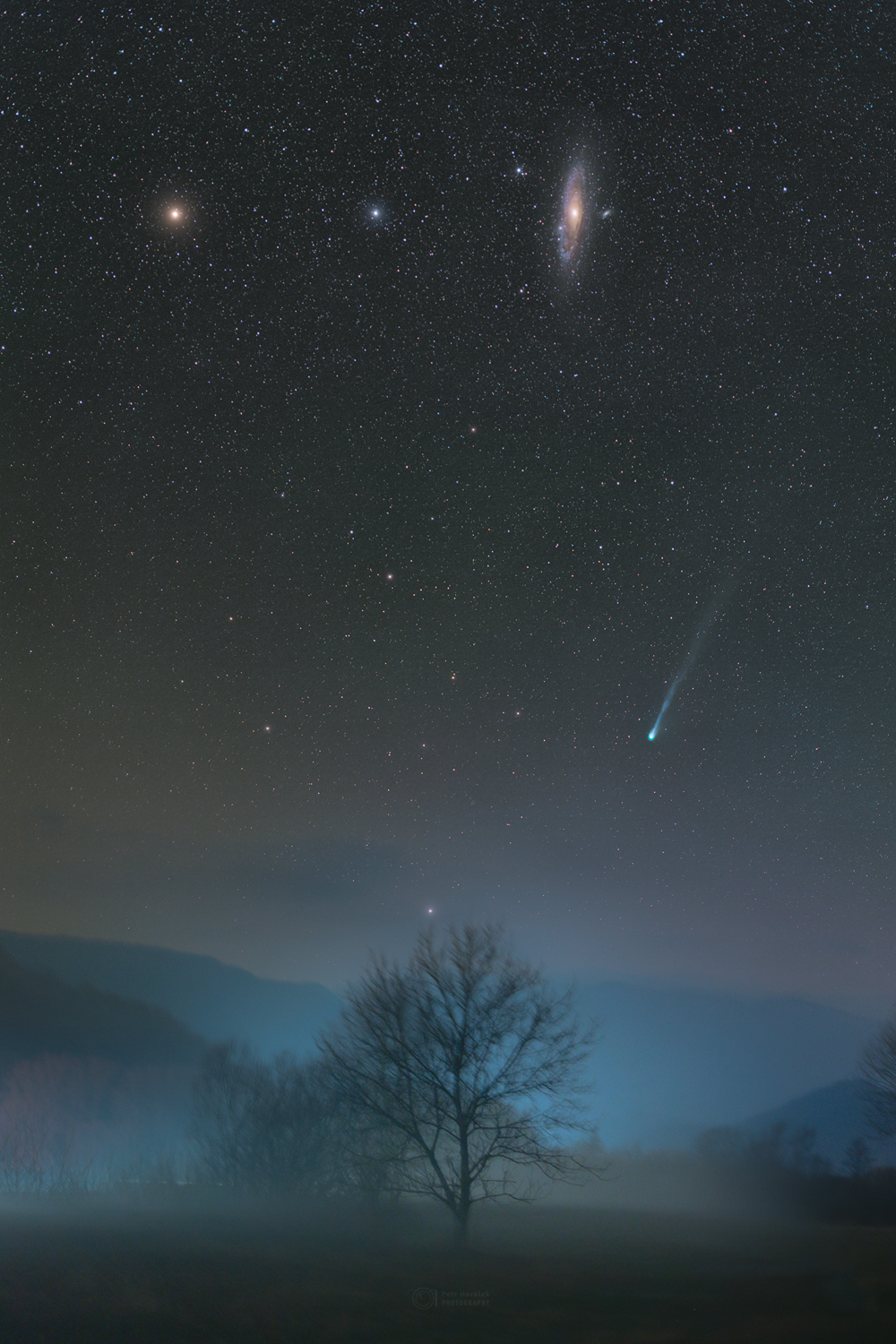
Comet Pons-Brooks in Northern Spring
09/03/2024
As spring approaches for northern skygazers, Comet 12P/Pons-Brooks is growing brighter. Currently visible with small telescopes and binoculars, the Halley-type comet could reach naked eye visibility in the coming weeks. Seen despite a foggy atmosphere, the comet's green coma and long tail hover near the horizon in this well-composed deep night skyscape from Revuca, Slovakia recorded on March 5. M31, also known as the Andromeda galaxy, and bright yellowish star Mirach, beta star of the constellation Andromeda, hang in the sky above the comet. The Andromeda galaxy is some 2.5 million light-years beyond the Milky Way. Comet Pons-Brooks is a periodic visitor to the inner Solar System and less than 14 light-minutes away. Reaching its perihelion on April 21, this comet should be visible in the sky during the April 8 total solar eclipse.
Copyright: Petr Horálek
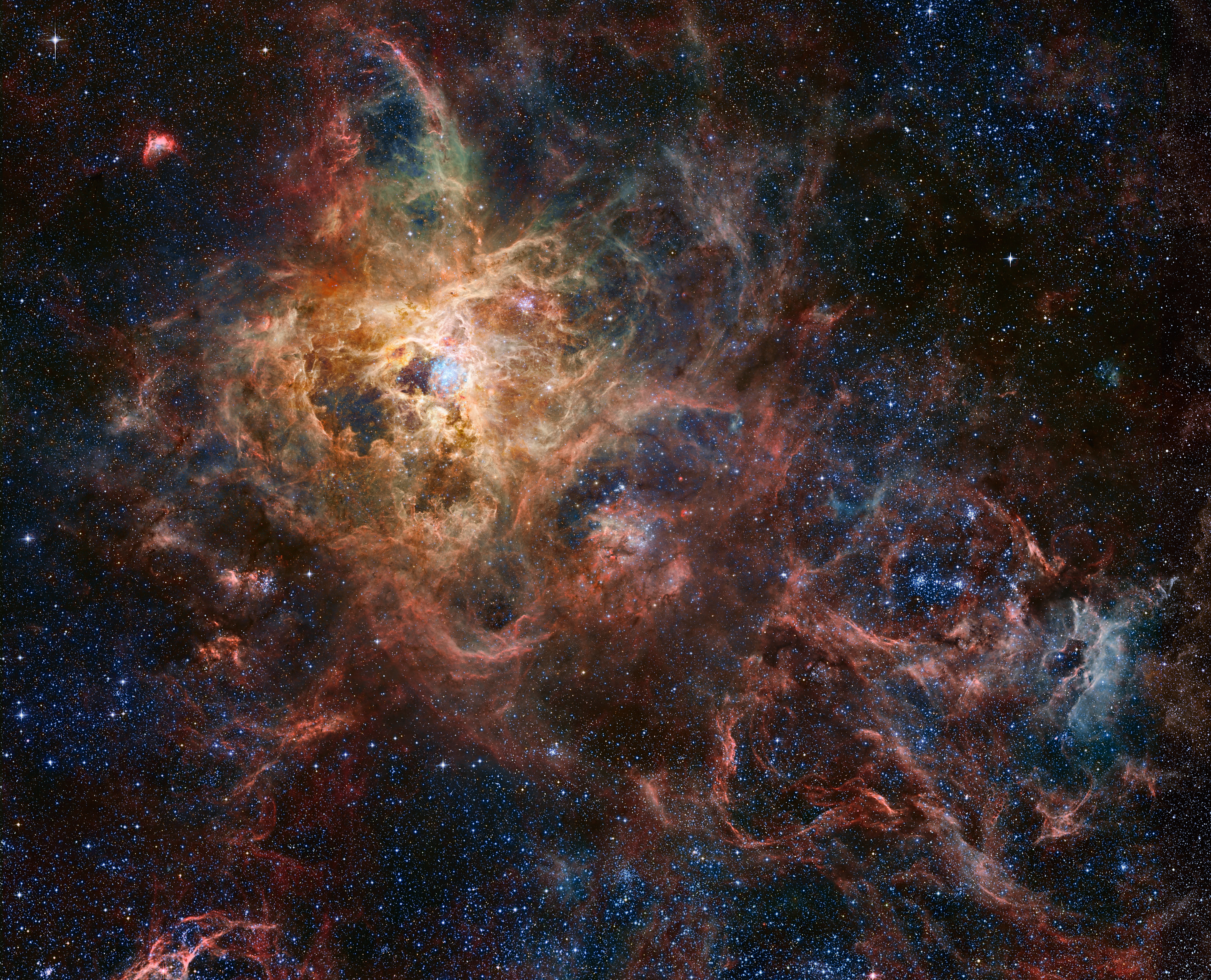
The Tarantula Zone
08/03/2024
The Tarantula Nebula, also known as 30 Doradus, is more than a thousand light-years in diameter, a giant star forming region within nearby satellite galaxy the Large Magellanic Cloud. About 180 thousand light-years away, it's the largest, most violent star forming region known in the whole Local Group of galaxies. The cosmic arachnid sprawls across this magnificent view, an assembly of image data from large space- and ground-based telescopes. Within the Tarantula (NGC 2070), intense radiation, stellar winds, and supernova shocks from the central young cluster of massive stars cataloged as R136 energize the nebular glow and shape the spidery filaments. Around the Tarantula are other star forming regions with young star clusters, filaments, and blown-out bubble-shaped clouds. In fact, the frame includes the site of the closest supernova in modern times, SN 1987A, at lower right. The rich field of view spans about 2 degrees or 4 full moons in the southern constellation Dorado. But were the Tarantula Nebula closer, say 1,500 light-years distant like the Milky Way's own star forming Orion Nebula, it would take up half the sky.
Copyright: Robert Gendler
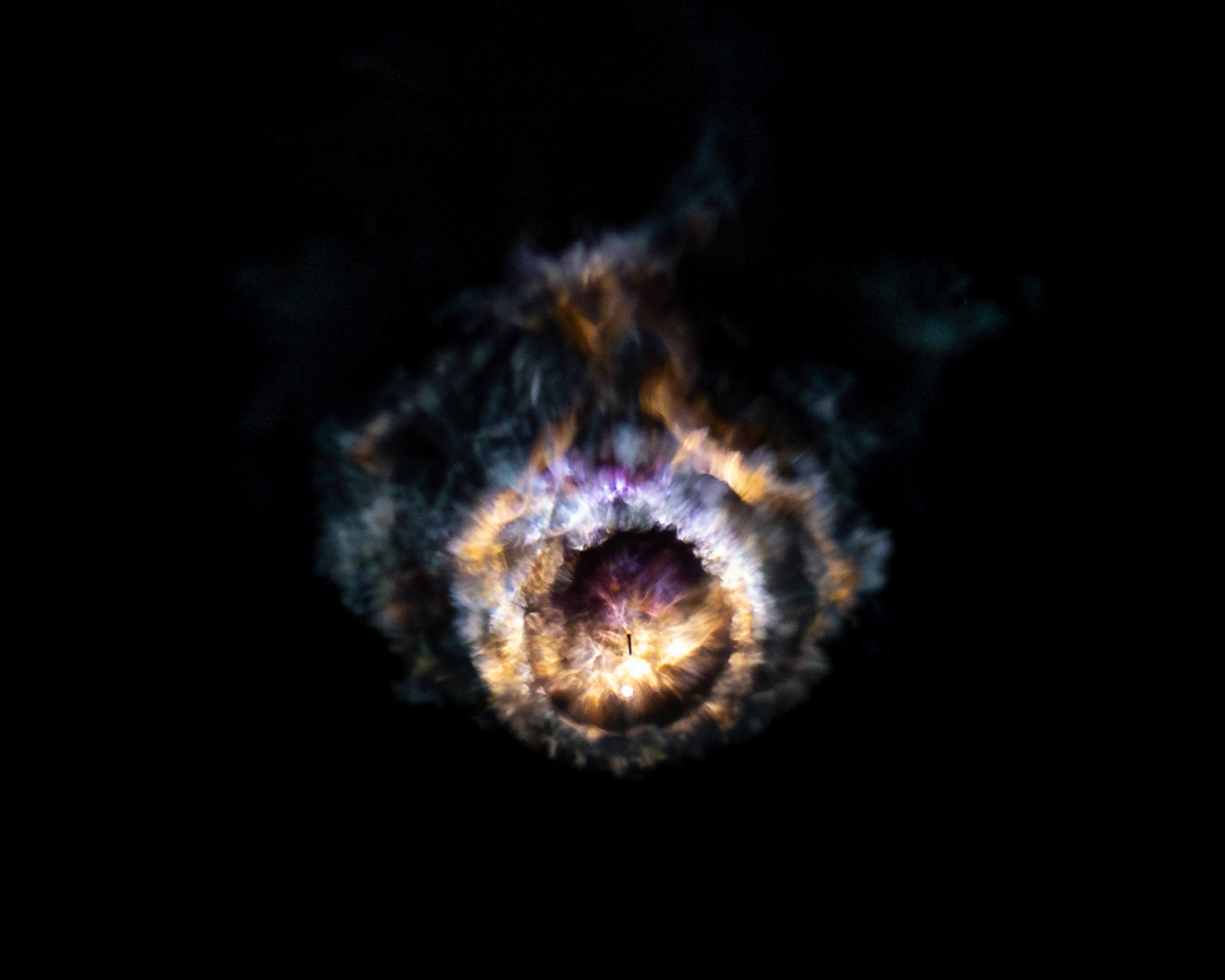
The Crew-8 Nebula
07/03/2024
Not the James Webb Space Telescope's latest view of a distant galactic nebula, this cloud of gas and dust dazzled spacecoast skygazers on March 3. The telephoto snapshot was taken minutes after the launch of a Falcon 9 rocket on the SpaceX Crew-8 mission to the International Space Station. It captures plumes and exhaust from the separated first and second stages, a drifting Rorschach pattern in dark evening skies. The bright spot near bottom center within the stunning terrestrial nebulosity is the second stage engine firing to carry 4 humans to space in the Crew Dragon spacecraft Endeavour. In sharp silhouette just above it is the Falcon 9 first stage booster orienting itself for return to a landing zone at Cape Canaveral, planet Earth. This reuseable first stage booster was making its first flight. But the Crew Dragon Endeavour capsule has flown humans to low Earth orbit and back again 4 times before. Endeavour, as a name for a spacecraft, has also seen reuse, christening retired Space Shuttle Endeavour and the Apollo 15 command module.
Copyright: Michael Seeley
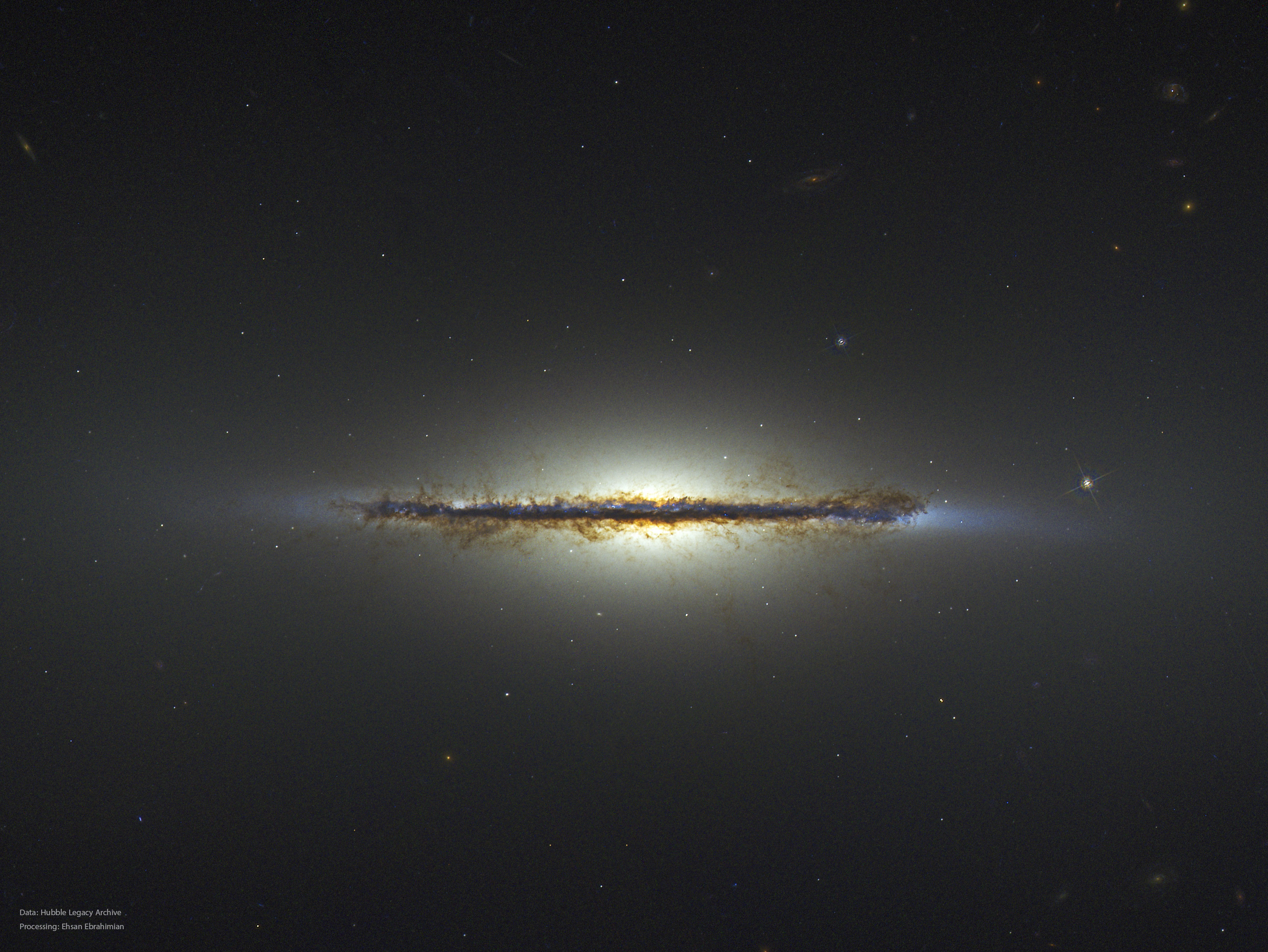
M102: Edge-on Disk Galaxy
06/03/2024
What kind of celestial object is this? A relatively normal galaxy -- but seen from its edge. Many disk galaxies are actually just as thin as NGC 5866, the Spindle galaxy, pictured here, but are not seen edge-on from our vantage point. A perhaps more familiar galaxy seen edge-on is our own Milky Way galaxy. Also cataloged as M102, the Spindle galaxy has numerous and complex dust lanes appearing dark and red, while many of the bright stars in the disk give it a more blue underlying hue. The blue disk of young stars can be seen in this Hubble image extending past the dust in the extremely thin galactic plane. There is evidence that the Spindle galaxy has cannibalized smaller galaxies over the past billion years or so, including multiple streams of faint stars, dark dust that extends away from the main galactic plane, and a surrounding group of galaxies (not shown). In general, many disk galaxies become thin because the gas that forms them collides with itself as it rotates about the gravitational center. The Spindle galaxy lies about 50 million light years distant toward the constellation of the Dragon (Draco).
Copyright: NASA
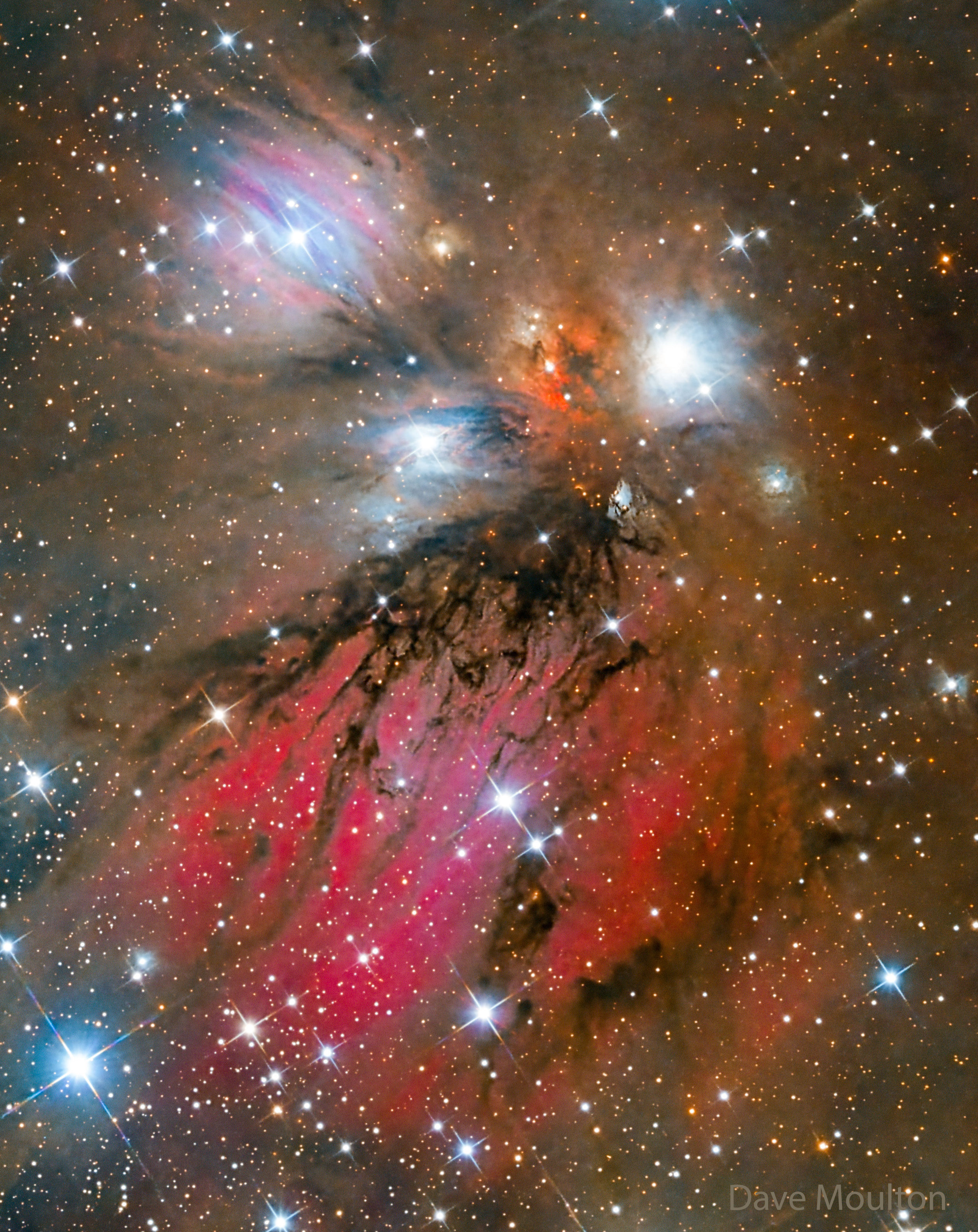
NGC 2170: Angel Nebula Abstract Art
05/03/2024
Is this a painting or a photograph? In this celestial abstract art composed with a cosmic brush, dusty nebula NGC 2170, also known as the Angel Nebula, shines just above the image center. Reflecting the light of nearby hot stars, NGC 2170 is joined by other bluish reflection nebulae, a red emission region, many dark absorption nebulae, and a backdrop of colorful stars. Like the common household items that abstract painters often choose for their subjects, the clouds of gas, dust, and hot stars featured here are also commonly found in a setting like this one -- a massive, star-forming molecular cloud in the constellation of the Unicorn (Monoceros). The giant molecular cloud, Mon R2, is impressively close, estimated to be only 2,400 light-years or so away. At that distance, this canvas would be over 60 light-years across.
Copyright: David Moulton
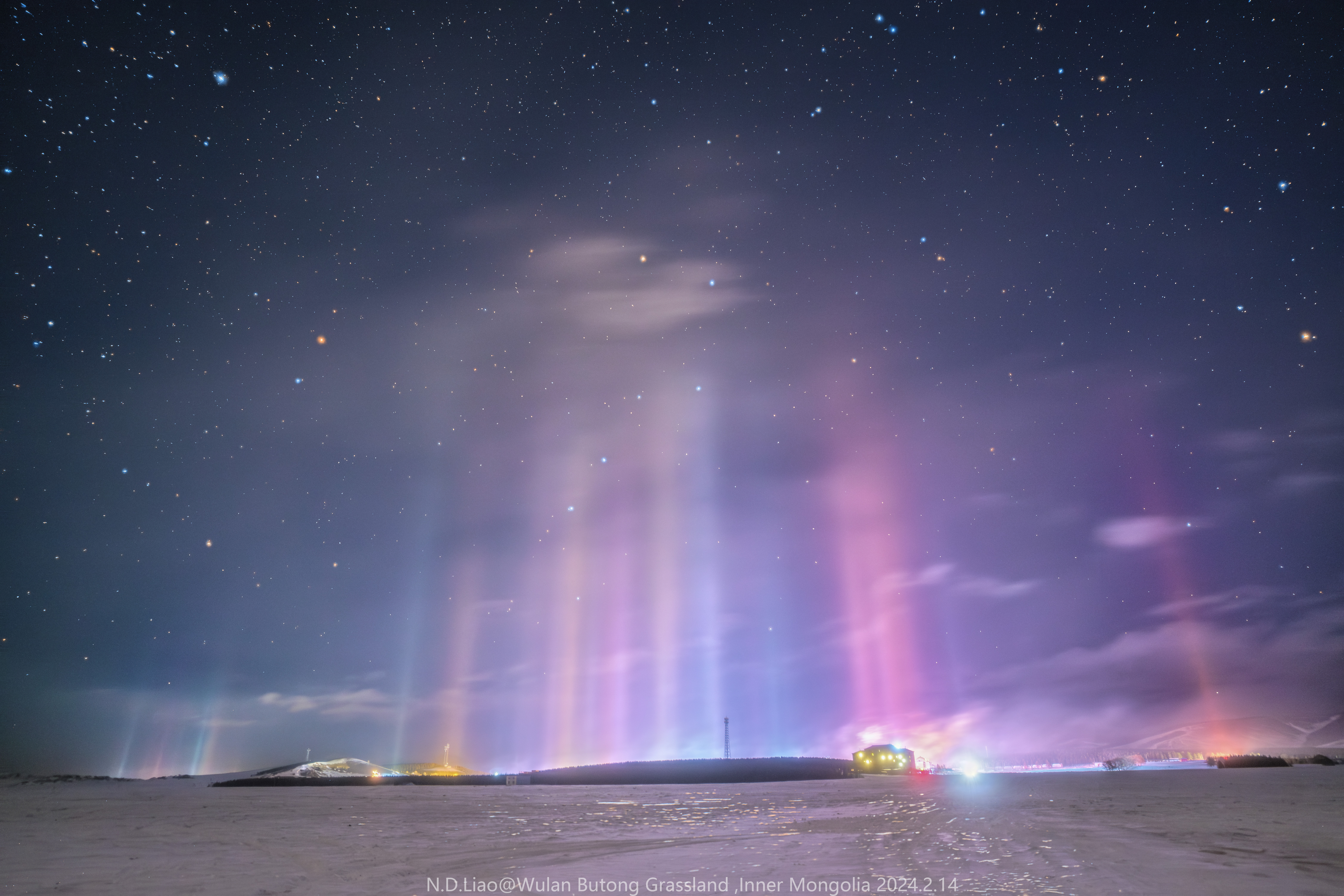
Light Pillars Over Inner Mongolia
04/03/2024
What's happening across that field? Pictured here are not auroras but nearby light pillars, a phenomenon typically much closer. In most places on Earth, a lucky viewer can see a Sun pillar, a column of light appearing to extend up from the Sun caused by flat fluttering ice-crystals reflecting sunlight from the upper atmosphere. Usually, these ice crystals evaporate before reaching the ground. During freezing temperatures, however, flat fluttering ice crystals may form near the ground in a form of light snow sometimes known as a crystal fog. These ice crystals may then reflect ground lights in columns not unlike a Sun pillar. The featured image was taken last month across the Wulan Butong Grasslands in Inner Mongolia, China.
Copyright: N. D. Liao
Η Αστρονομική Εικόνα της Ημέρας από τη NASA (NASA Astronomy Picture of the Day) είναι μια δωρεάν υπηρεσία που παρέχει καθημερινά μια εντυπωσιακή εικόνα από το σύμπαν, την λήψη της οποίας έχει πραγματοποιήσει κάποιος από τους αστρονόμους της NASA ή από κάποιον από τους δορυφόρους ή τα τηλεσκόπια που η NASA λειτουργεί. Οι εικόνες που εμφανίζονται καλύπτουν μια ευρεία γκάμα από θέματα, συμπεριλαμβανομένων των αστερισμών, των γαλαξιών, των πλανητικών συστημάτων, των κομητών, των αστρικών σωμάτων και των παρατηρητηρίων. Κάθε εικόνα συνοδεύεται από μια σύντομη εξήγηση και πληροφορίες σχετικά με το τι παρατηρείται στην εικόνα.