Η Αστρονομική Εικόνα της Ημέρας από τη NASA
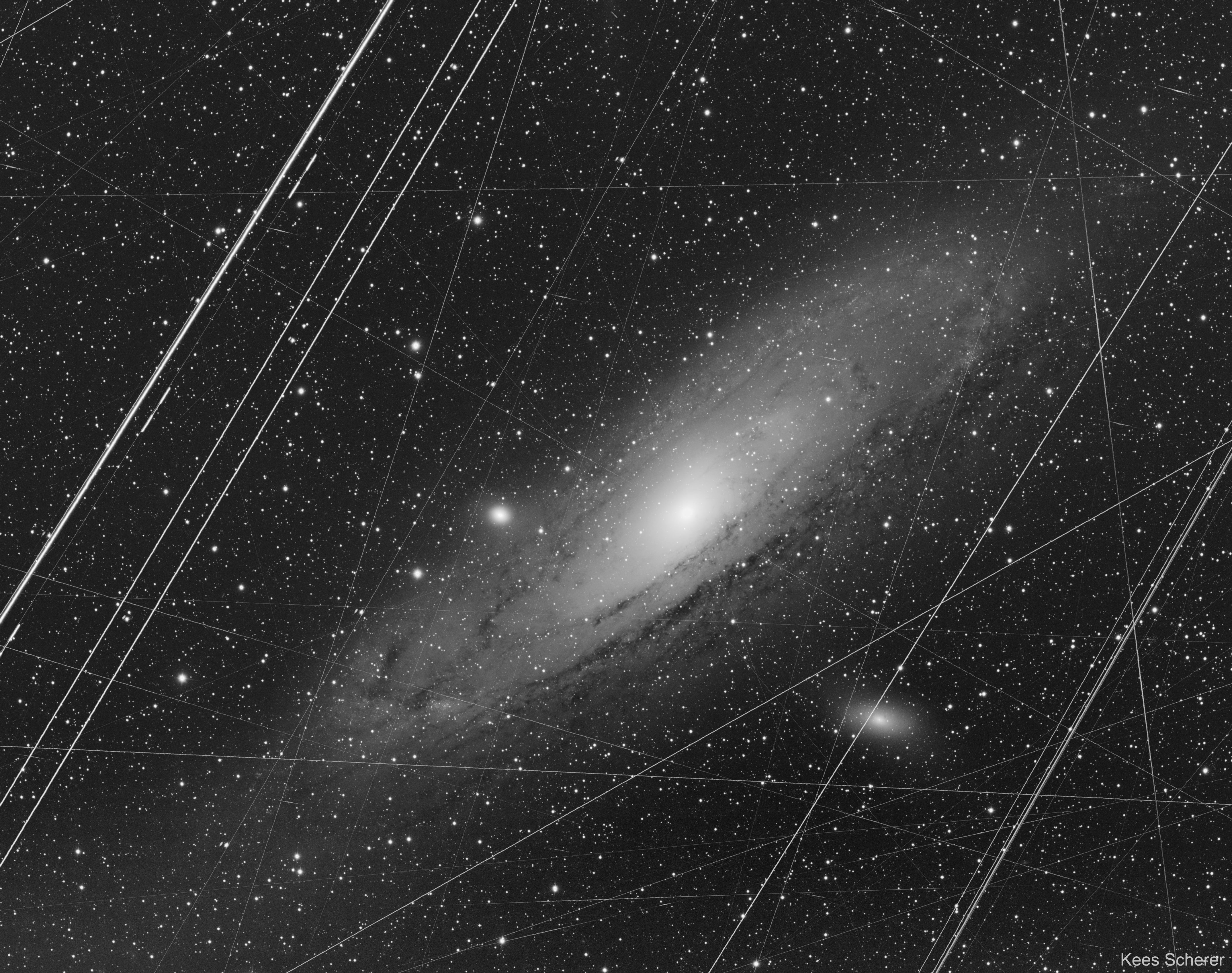
Andromeda before Photoshop
27/09/2026
What does the Andromeda galaxy really look like? The featured image shows how our Milky Way Galaxy's closest major galactic neighbor really appears in a long exposure through Earth's busy skies and with a digital camera that introduces normal imperfections. The picture is a stack of 223 images, each a 300 second exposure, taken from a garden observatory in Portugal during 2019. Obvious image deficiencies include bright parallel airplane trails, long and continuous satellite trails, short cosmic ray streaks, and bad pixels. These imperfections were actually not removed with Photoshop specifically, but rather greatly reduced with a series of computer software packages that included Astro Pixel Processor, DeepSkyStacker, and PixInsight. All of this work was done not to deceive you with a digital fantasy that has little to do with the real likeness of the Andromeda galaxy (M31), but to minimize Earthly artifacts that have nothing to do with the distant galaxy and so better recreate what M31 really does look like. APOD's email for image submissions has changed. Please see: APOD Submissions APOD's main NASA site is moving: From apod.nasa.gov to science.nasa.gov/apod
Copyright: NASA
Προηγούμενες Αστρονομικές Εικόνες της Ημέρας από τη NASA
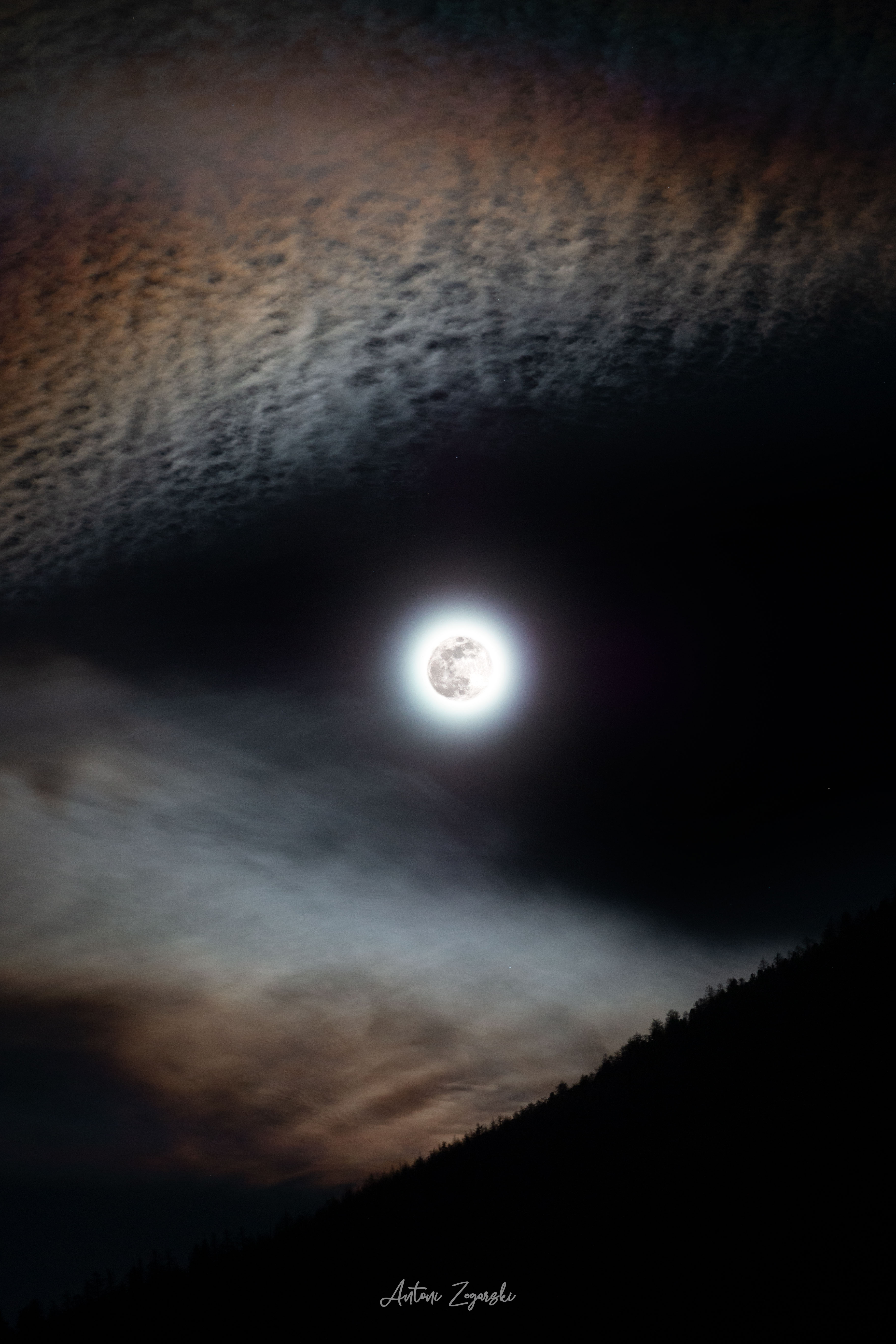
A January Wolf Moon
13/02/2024
Did you see the full moon last month? During every month, on average, a full moon occurs in the skies over planet Earth. This is because the Moon takes a month to complete another orbit around our home planet, goes through all of its phases, and once again has its entire Earth-facing half lit by reflected sunlight. Many indigenous cultures give each full moon a name, and this past full moon's names include the Ice Moon, the Stay at Home Moon, and the Quiet Moon. Occurring in January on the modern western calendar, several cultures have also named the most recent full moon the Wolf Moon, in honor of the famous howling animal. Featured here above the Italian Alps mountains, this past Wolf Moon was captured in combined long and short exposure images. The image is striking because, to some, the surrounding clouds appear as a wolf's mouth ready to swallow the Wolf Moon, while others see the Moon as a wolf's eye.
Copyright: Antoni Zegarski
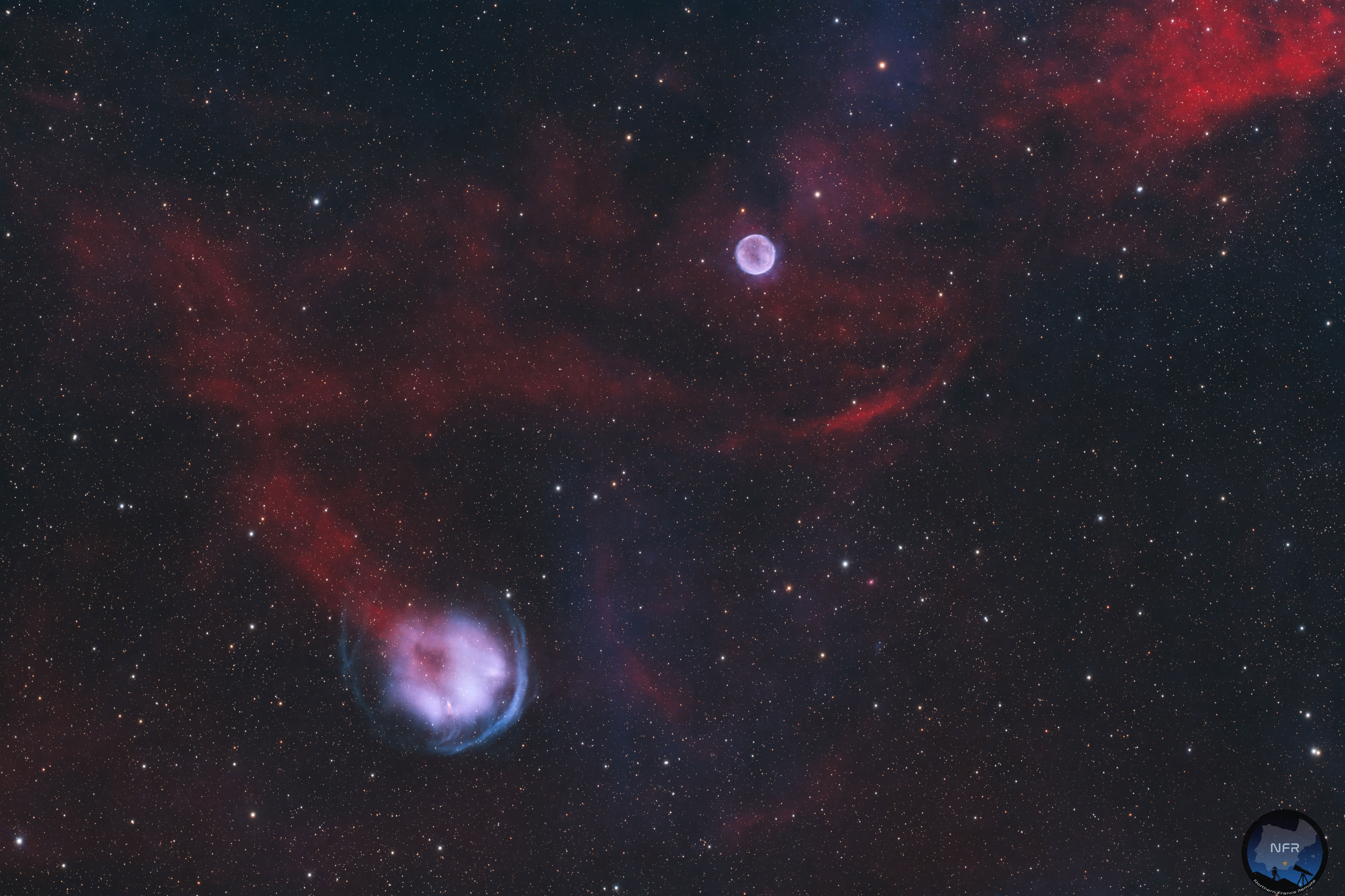
HFG1 & Abell 6: Planetary Nebulae
12/02/2024
Planetary nebulae like Heckathorn-Fesen-Gull 1 (HFG1) and Abell 6 in the constellation Cassiopeia are remnants from the last phase of a medium sized star like our Sun. In spite of their shapes, planetary nebulae have nothing in common with actual planets. Located in the bottom left part of the featured photo, HFG1 was created by the binary star system V664 Cas, which consists of a white dwarf star and a red giant star. Both stars orbit their center of mass over about half an Earth day. Traveling with the entire nebula at a speed about 300 times faster than the fastest train on Earth, V664 Cas generates a bluish arc shaped shock wave. The wave interacts most strongly with the surrounding interstellar medium in the areas where the arc is brightest. After roughly 10,000 years, planetary nebulae become invisible due to a lack of ultraviolet light being emitted by the stars that create them. Displaying beautiful shapes and structures, planetary nebulae are highly desired objects for astrophotographers.
Copyright: Julien Cadena & Mickael Coulon; Text: Natalia Lewandowska (SUNY Oswego)
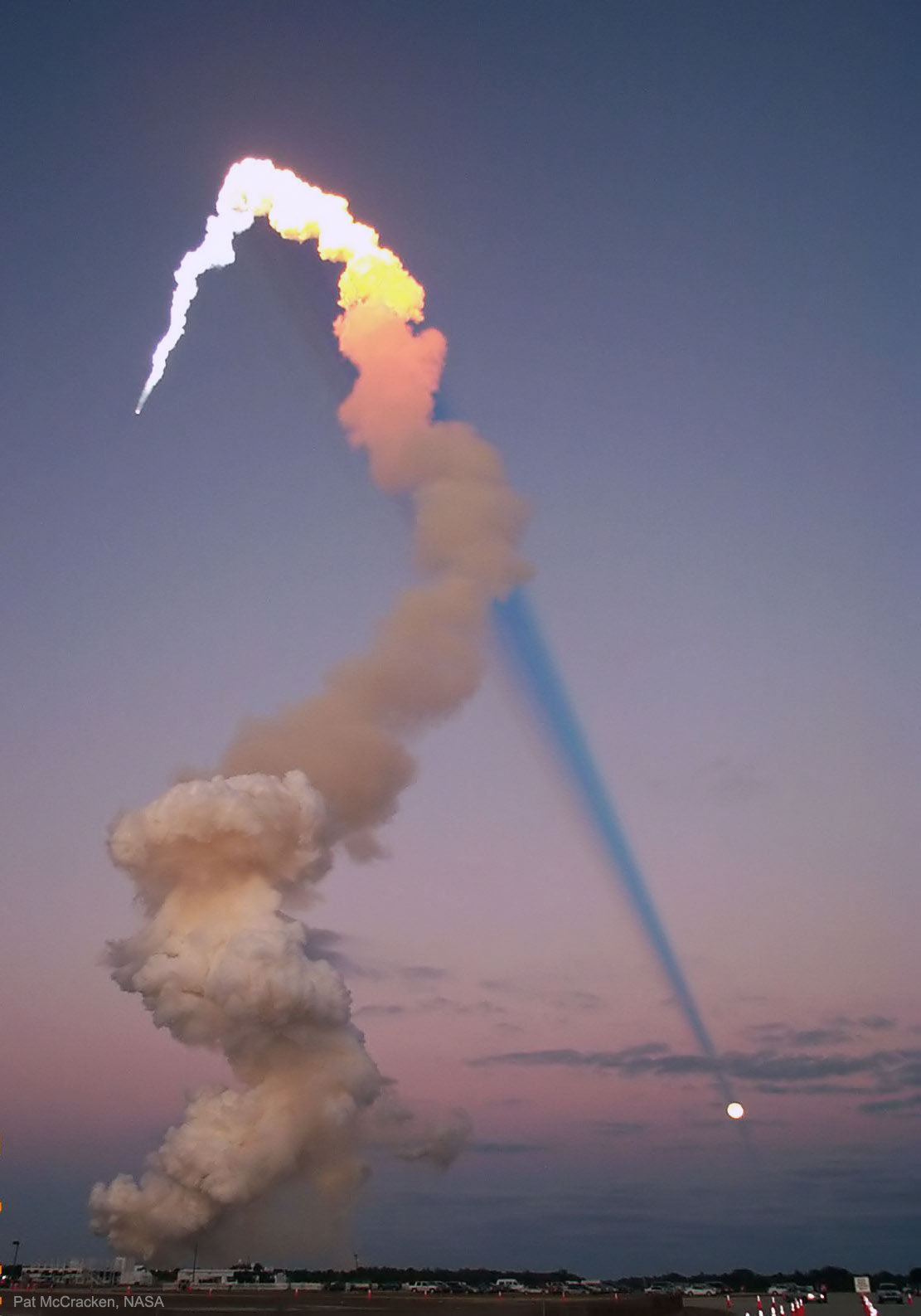
Rocket Plume Shadow Points to the Moon
11/02/2024
Why would the shadow of a rocket's launch plume point toward the Moon? In early 2001 during a launch of the space shuttle Atlantis, the Sun, Earth, Moon, and rocket were all properly aligned for this photogenic coincidence. First, for the space shuttle's plume to cast a long shadow, the time of day must be either near sunrise or sunset. Only then will the shadow be its longest and extend all the way to the horizon. Finally, during a Full Moon, the Sun and Moon are on opposite sides of the sky. Just after sunset, for example, the Sun is slightly below the horizon, and, in the other direction, the Moon is slightly above the horizon. Therefore, as Atlantis blasted off, just after sunset, its shadow projected away from the Sun toward the opposite horizon, where the Full Moon happened to be. Almost Hyperspace: Random APOD Generator
Copyright: NASA
The Shadow of Ingenuity's Damaged Rotor Blade
10/02/2024
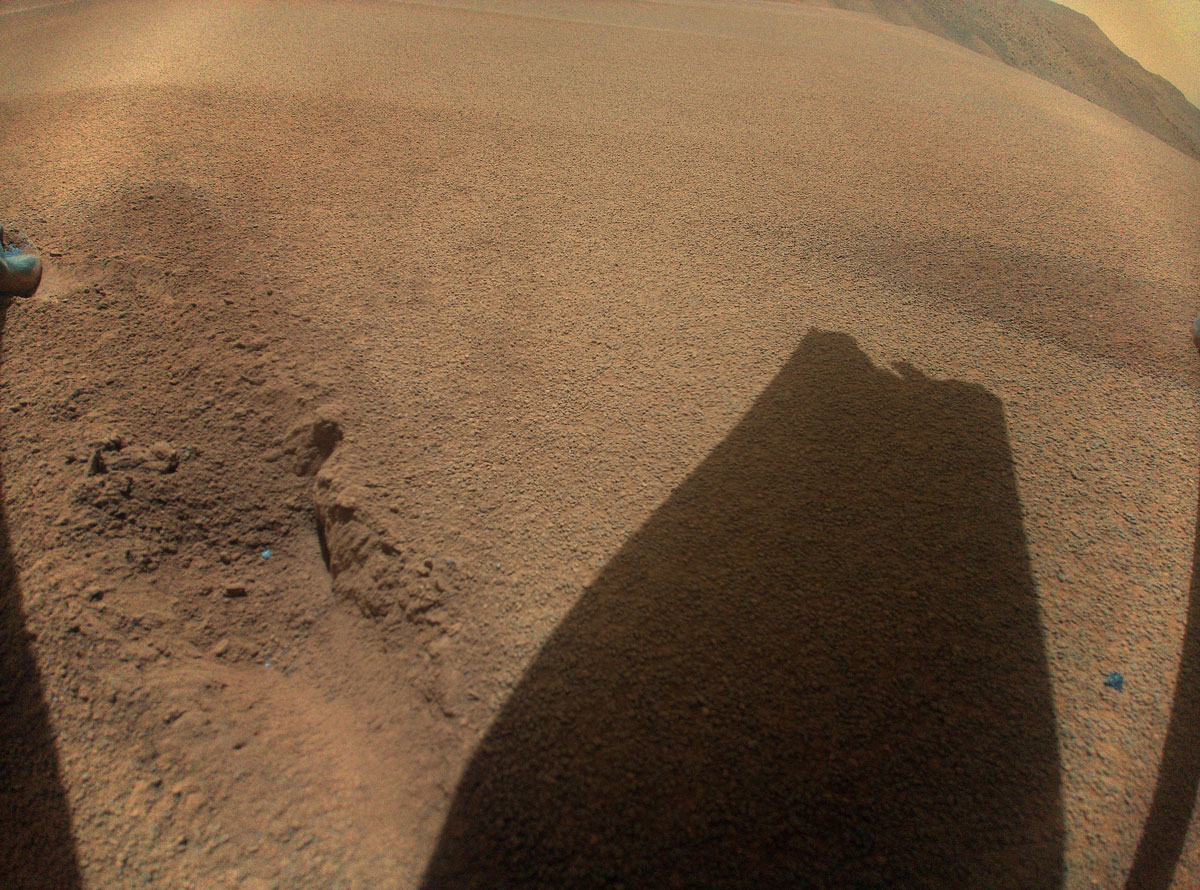
On January 18, 2024, during its 72nd flight in the thin Martian atmosphere, autonomous Mars Helicopter Ingenuity rose to an altitude of 12 meters (40 feet) and hovered for 4.5 seconds above the Red Planet. Ingenuity's 72nd landing was a rough one though. During descent it lost contact with the Perseverance rover about 1 meter above the Martian surface. Ingenuity was able to transmit this image after contact was re-established, showing the shadow of one of its rotor blades likely damaged during landing. And so, after wildly exceeding expectations during over 1,000 days of exploring Mars, the history-making Ingenuity has ended its flight operations. Nicknamed Ginny, Mars Helicopter Ingenuity became the first aircraft to achieve powered, controlled flight on another planet on April 19, 2021. Before launch, a small piece of material from the lower-left wing of the Wright Brothers Flyer 1, the first aircraft to achieve powered, controlled flight on planet Earth, was fixed to the underside of Ingenuity's solar panel.
Copyright: NASA
When Roses Aren't Red
09/02/2024
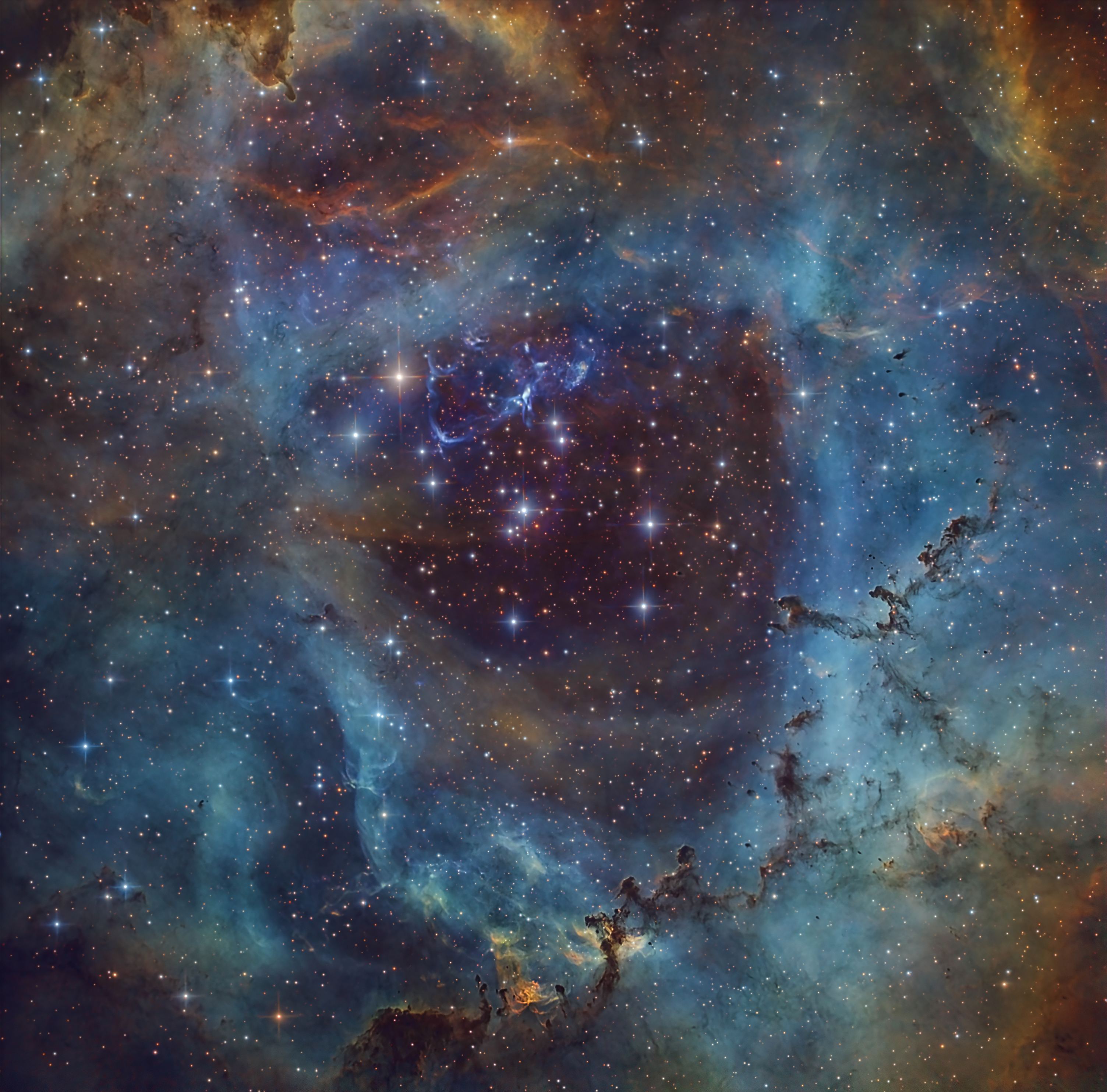
Not all roses are red of course, but they can still be very pretty. Likewise, the beautiful Rosette Nebula and other star forming regions are often shown in astronomical images with a predominately red hue, in part because the dominant emission in the nebula is from hydrogen atoms. Hydrogen's strongest optical emission line, known as H-alpha, is in the red region of the spectrum. But the beauty of an emission nebula need not be appreciated in red light alone. Other atoms in the nebula are also excited by energetic starlight and produce narrow emission lines as well. In this close-up view of the Rosette Nebula, narrowband images are mapped into broadband colors to show emission from Sulfur atoms in red, Hydrogen in green, and Oxygen in blue. In fact, the scheme of mapping these narrow atomic emission lines (SHO) into the broader colors (RGB) is adopted in many Hubble images of emission nebulae. This image spans about 50 light-years across the center of the Rosette Nebula. The nebula lies some 3,000 light-years away in the constellation Monoceros.
Copyright: Tommy Lease
Globular Star Cluster 47 Tuc
08/02/2024
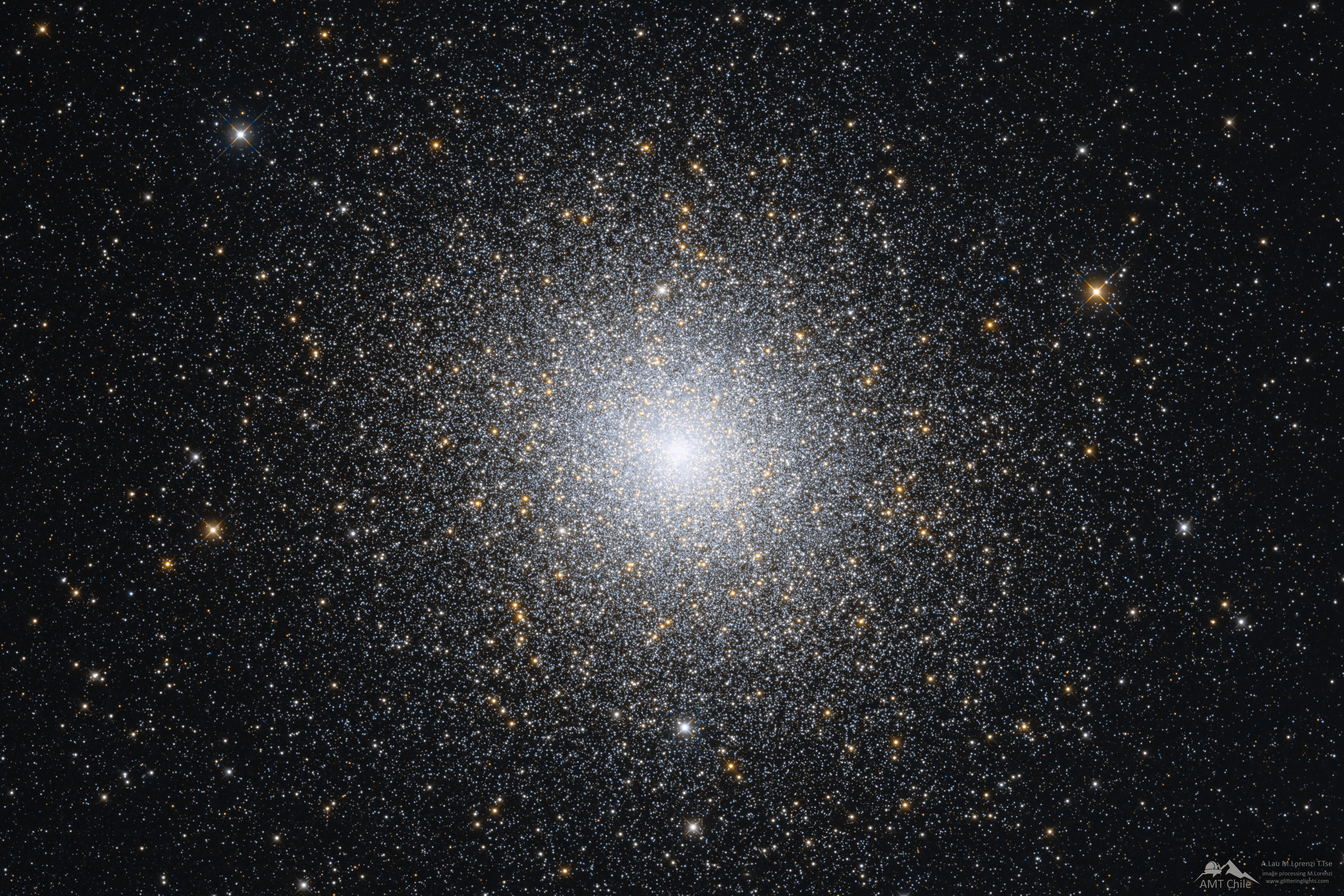
Globular star cluster 47 Tucanae is a jewel of the southern sky. Also known as NGC 104, it roams the halo of our Milky Way Galaxy along with some 200 other globular star clusters. The second brightest globular cluster (after Omega Centauri) as seen from planet Earth, 47 Tuc lies about 13,000 light-years away. It can be spotted with the naked-eye close on the sky to the Small Magellanic Cloud in the constellation of the Toucan. The dense cluster is made up of hundreds of thousands of stars in a volume only about 120 light-years across. Red giant stars on the outskirts of the cluster are easy to pick out as yellowish stars in this sharp telescopic portrait. Tightly packed globular cluster 47 Tuc is also home to a star with the closest known orbit around a black hole.
Copyright: Marco Lorenzi
NGC 1566: A Spiral Galaxy from Webb and Hubble
06/02/2024
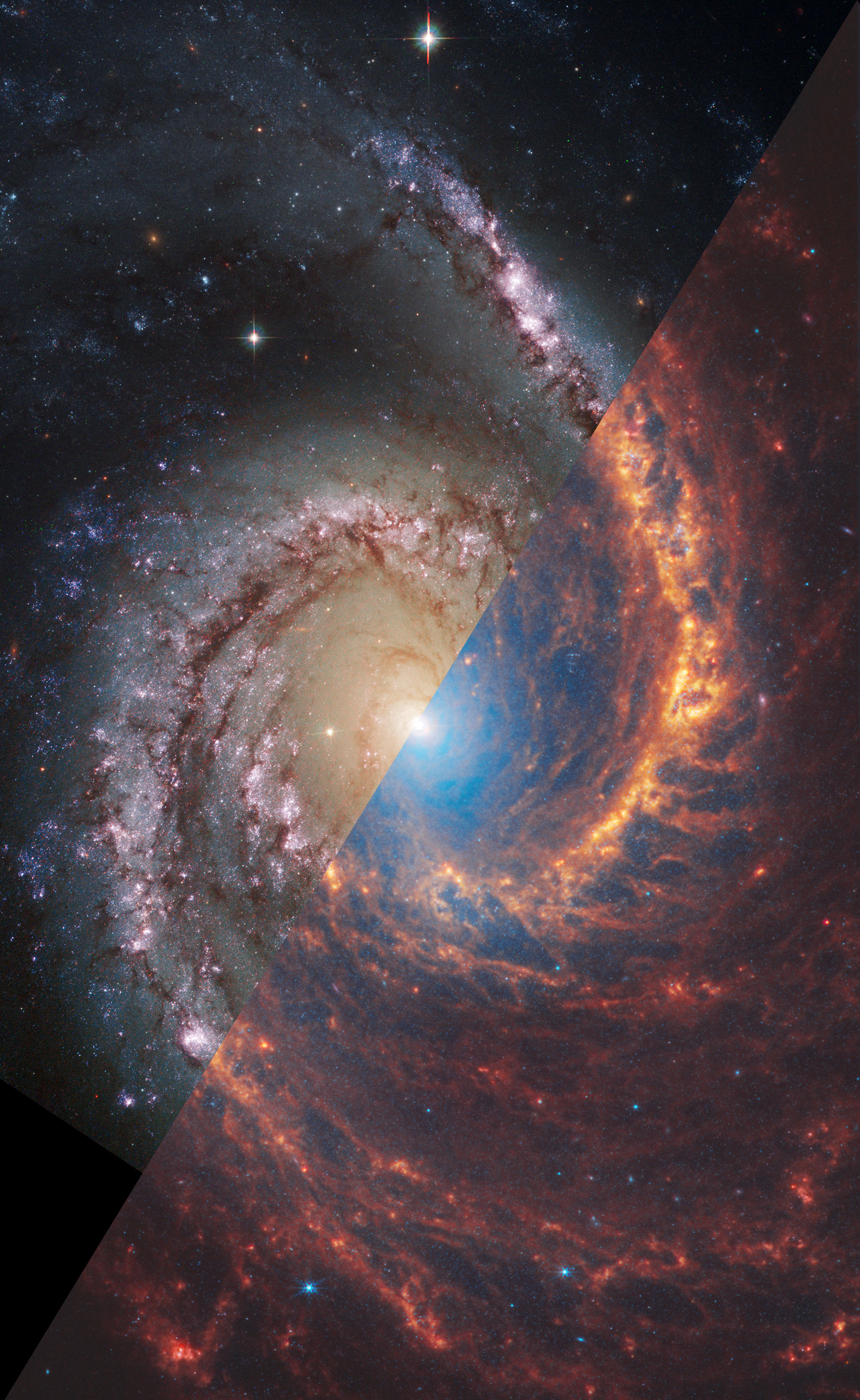
What's different about this galaxy? Very little, which makes the Spanish Dancer galaxy, NGC 1566, one of the most typical and photogenic spirals on the sky. There is something different about this galaxy image, though, because it is a diagonal combination of two images: one by the Hubble Space Telescope on the upper left, and the other by the James Webb Space Telescope on the lower right. The Hubble image was taken in ultraviolet light and highlights the locations of bright blue stars and dark dust along the galaxy's impressive spiral arms. In contrast, the Webb image was taken in infrared light and highlights where the same dust emits more light than it absorbed. In the rollover image, the other two sides of these images are revealed. Blinking between the two images shows which stars are particularly hot because they glow brighter in ultraviolet light, and the difference between seemingly empty space and infrared-glowing dust. Image Crunching Opportunity: Take NASA's Astrophoto Challenge
Copyright: NASA, ESA, CSA, STScI, J. Lee (STScI), T. Williams (Oxford), R. Chandar (UToledo), D. Calzetti (UMass), PHANGS Team

In the Core of the Carina Nebula
05/02/2024
What's happening in the core of the Carina Nebula? Stars are forming, dying, and leaving an impressive tapestry of dark dusty filaments. The entire Carina Nebula, cataloged as NGC 3372, spans over 300 light years and lies about 8,500 light-years away in the constellation of Carina. The nebula is composed predominantly of hydrogen gas, which emits the pervasive red and orange glows seen mostly in the center of this highly detailed featured image. The blue glow around the edges is created primarily by a trace amount of glowing oxygen. Young and massive stars located in the nebula's center expel dust when they explode in supernovas. Eta Carinae, the most energetic star in the nebula's center, was one of the brightest stars in the sky in the 1830s, but then faded dramatically. Your Sky Surprise: What picture did APOD feature on your birthday? (post 1995)
Copyright: Carlos Taylor
Η Αστρονομική Εικόνα της Ημέρας από τη NASA (NASA Astronomy Picture of the Day) είναι μια δωρεάν υπηρεσία που παρέχει καθημερινά μια εντυπωσιακή εικόνα από το σύμπαν, την λήψη της οποίας έχει πραγματοποιήσει κάποιος από τους αστρονόμους της NASA ή από κάποιον από τους δορυφόρους ή τα τηλεσκόπια που η NASA λειτουργεί. Οι εικόνες που εμφανίζονται καλύπτουν μια ευρεία γκάμα από θέματα, συμπεριλαμβανομένων των αστερισμών, των γαλαξιών, των πλανητικών συστημάτων, των κομητών, των αστρικών σωμάτων και των παρατηρητηρίων. Κάθε εικόνα συνοδεύεται από μια σύντομη εξήγηση και πληροφορίες σχετικά με το τι παρατηρείται στην εικόνα.